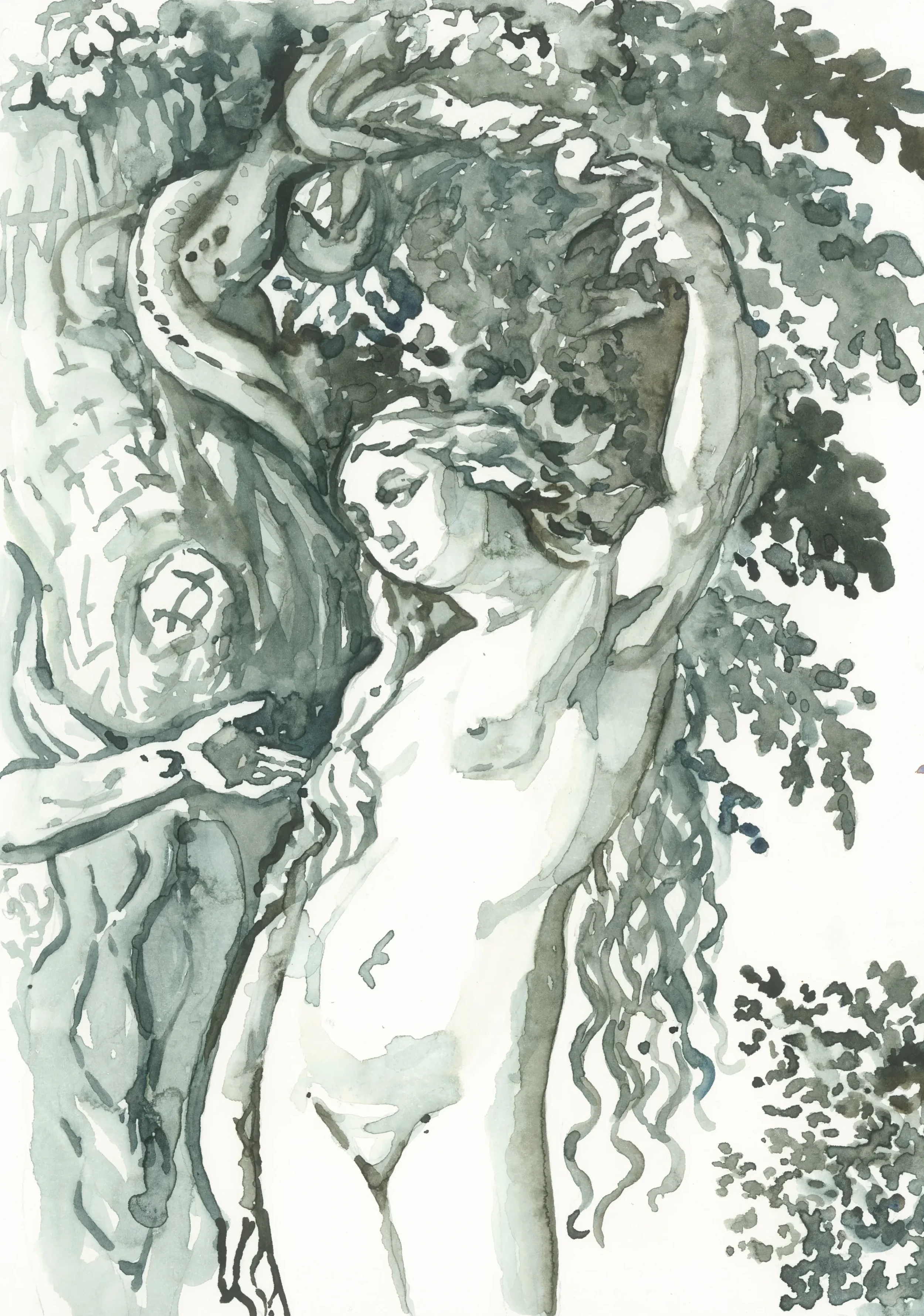
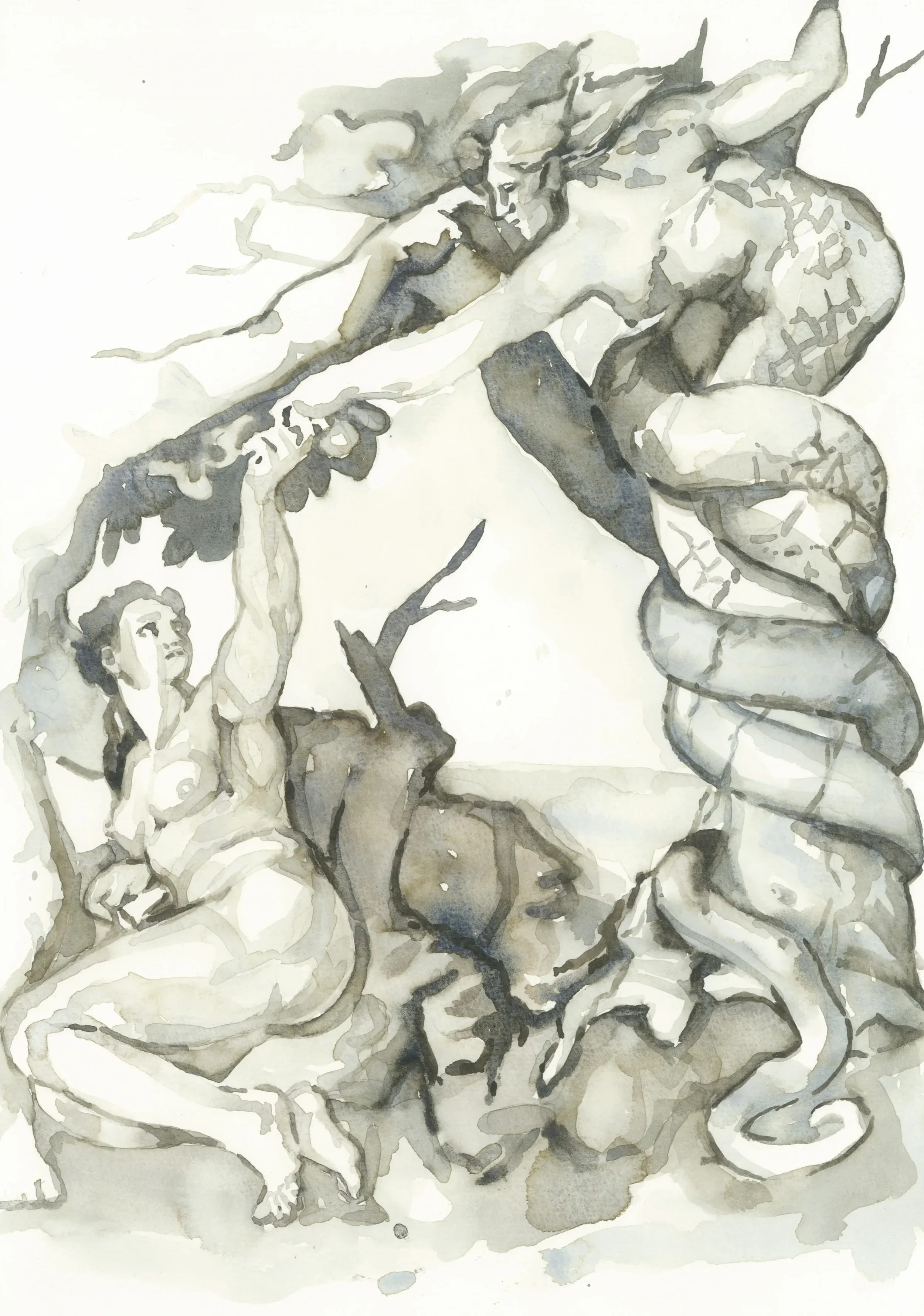
After Hendrick Goltzius
The Fall of Man (Adam and Eve) 1585
2025 Watercolour on Paper 21x29.7cm
Coil and Roar
with Emily O’Brien
Civic Art Bureau ∣ Canberra
Solo Exhibition 2026
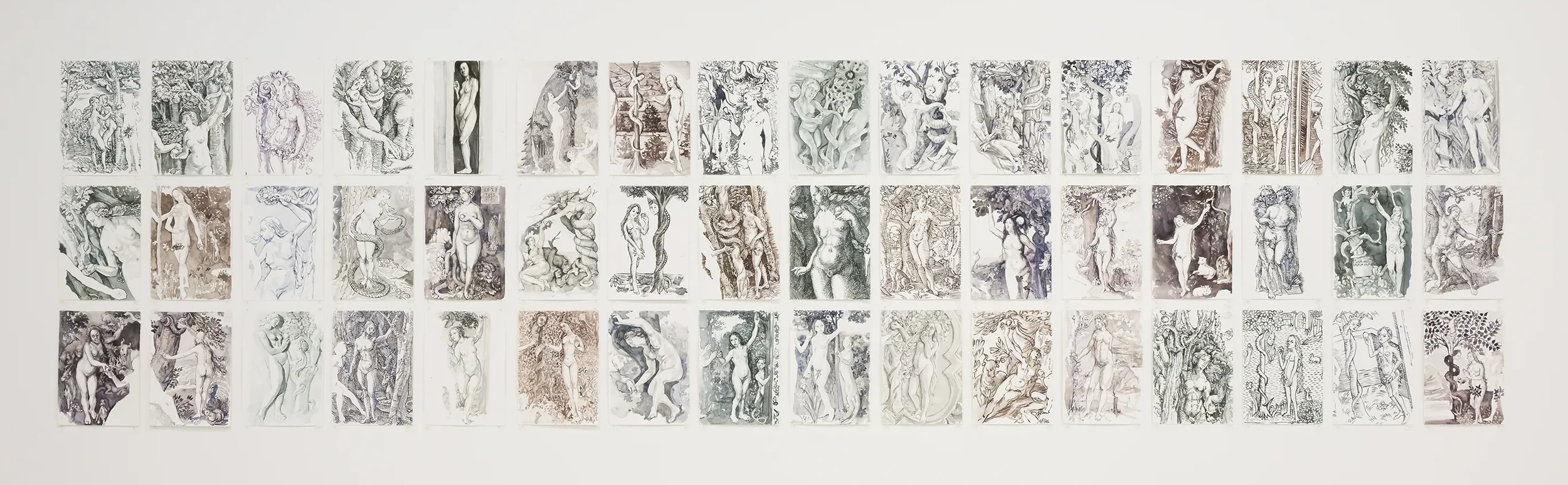
Eve Story
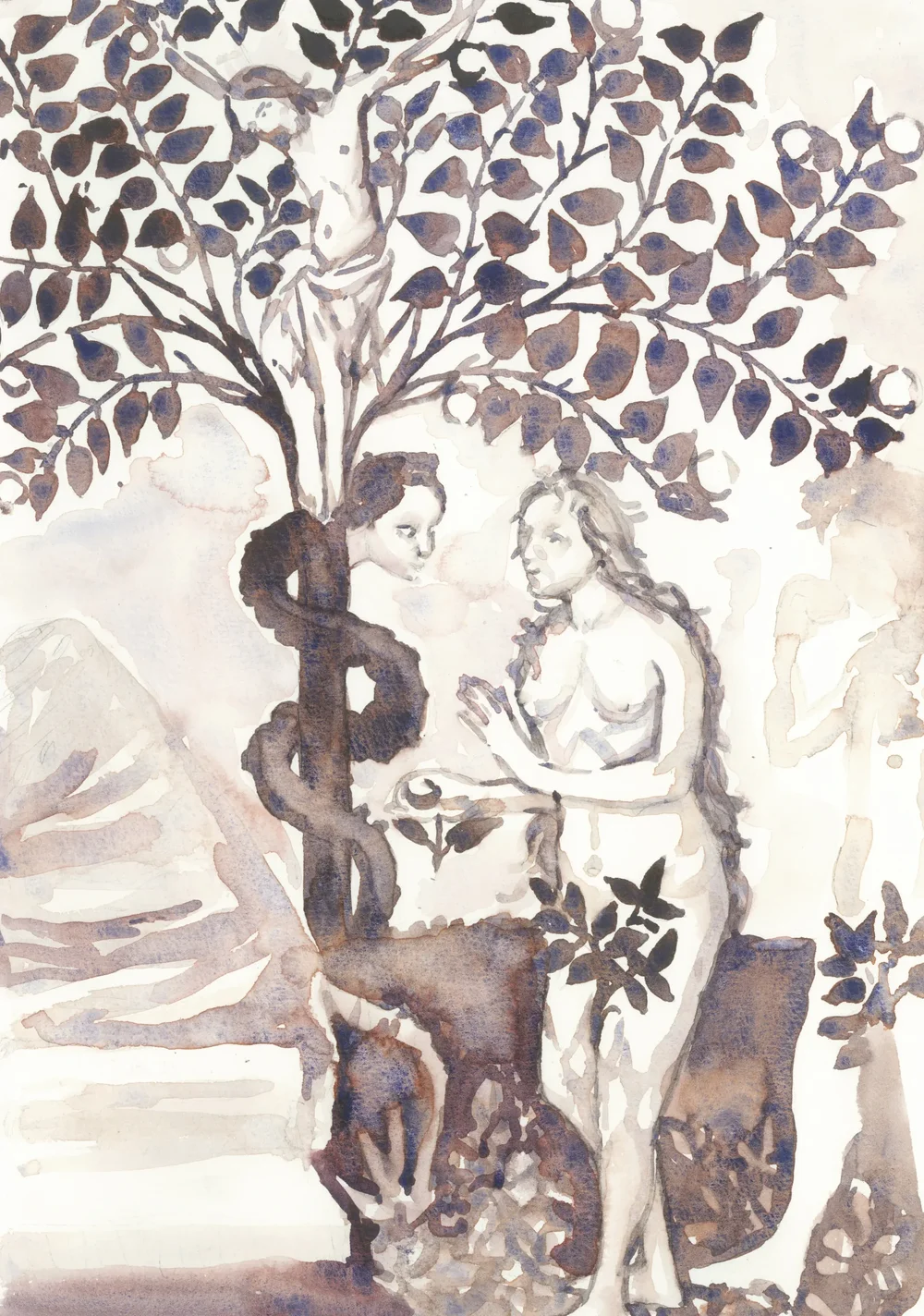
After Michele di Matteo
Dream of the Virgin 1440
2025 Watercolour on Paper 21x29.7cm
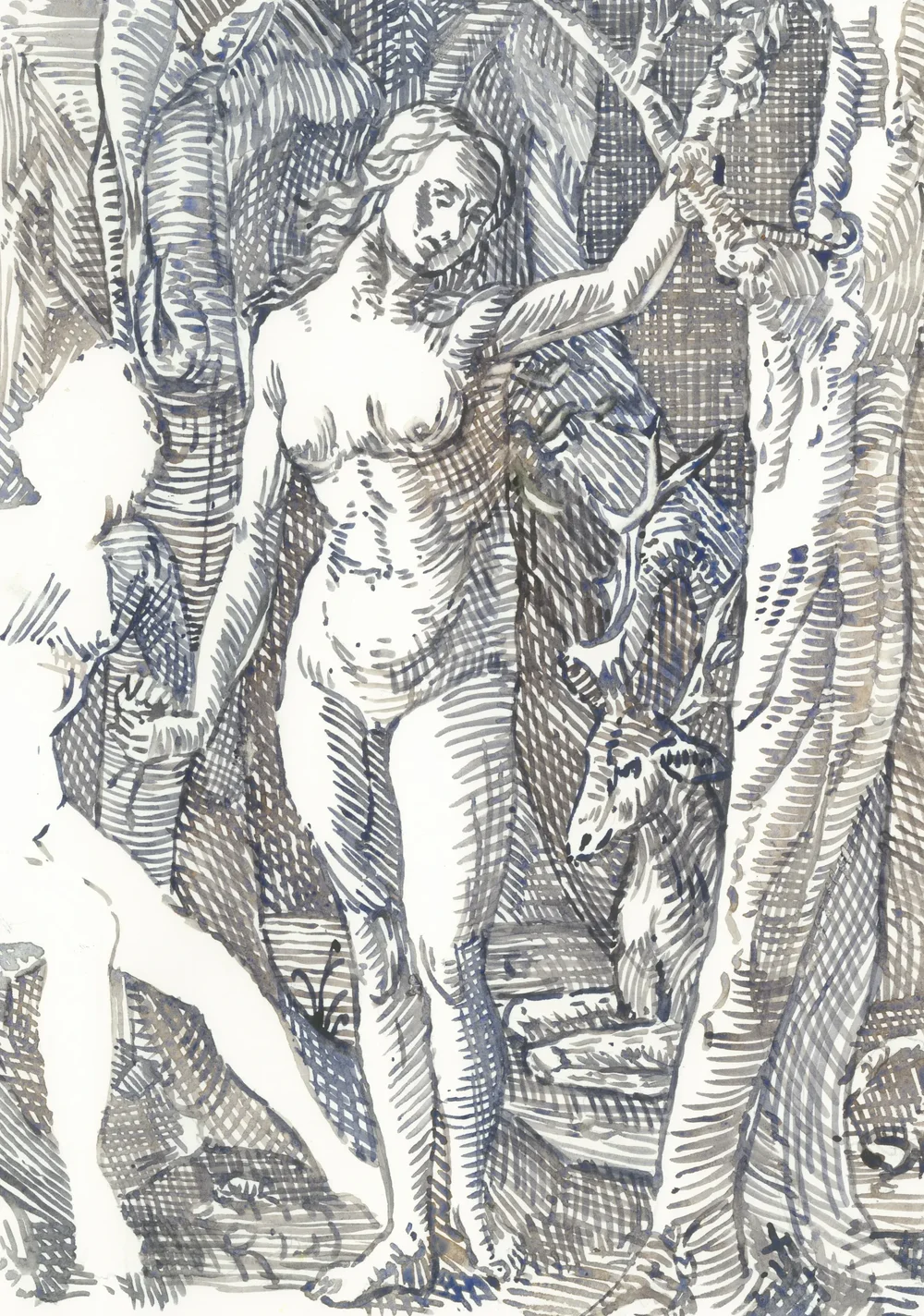
After Ludwig Krug
The Fall of Man 1508-1532
2025 Watercolour on Paper 21x29.7cm
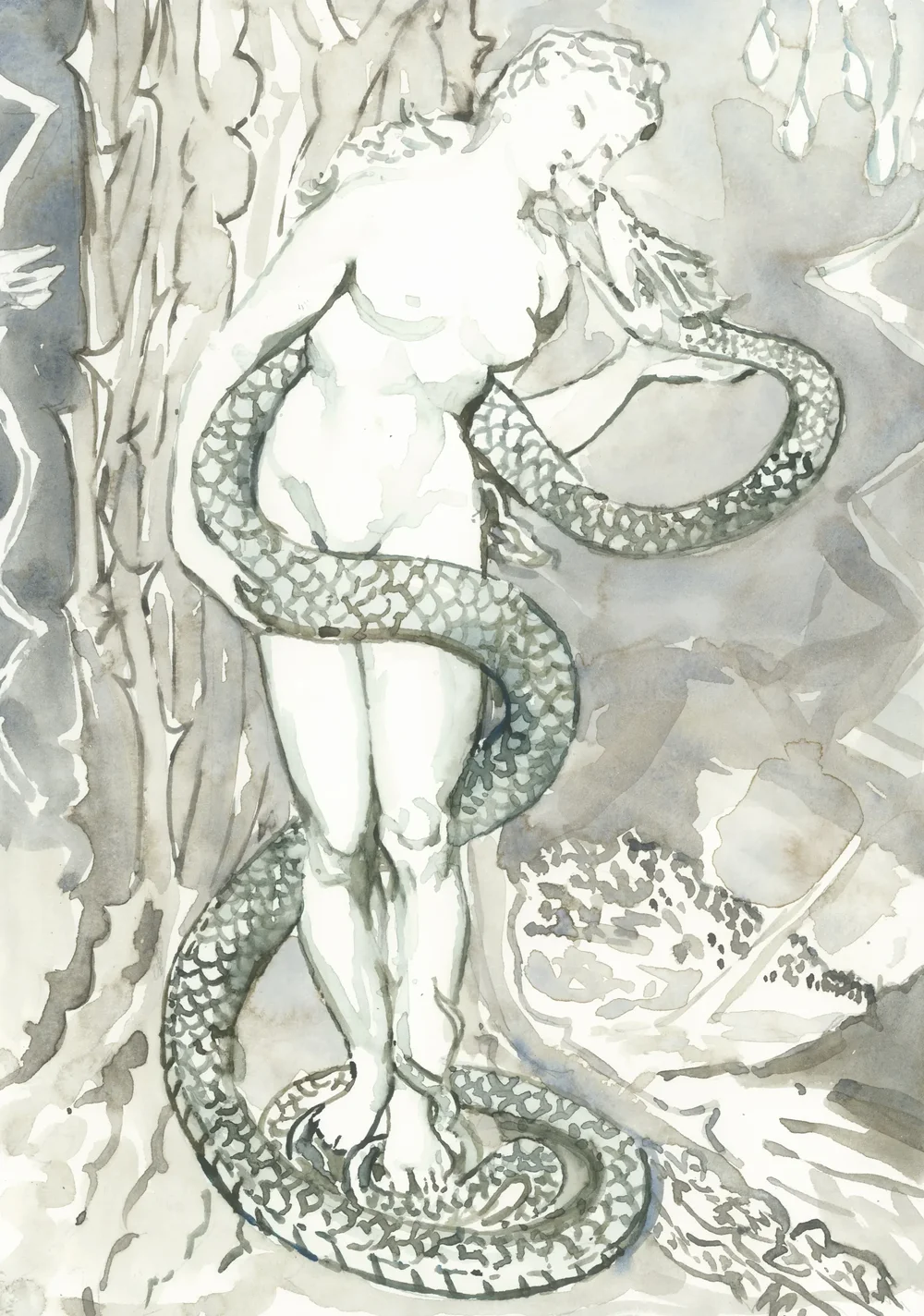
After William Blake
The Temptation and Fall of Eve 1808
2025 Watercolour on Paper 21x29.7cm
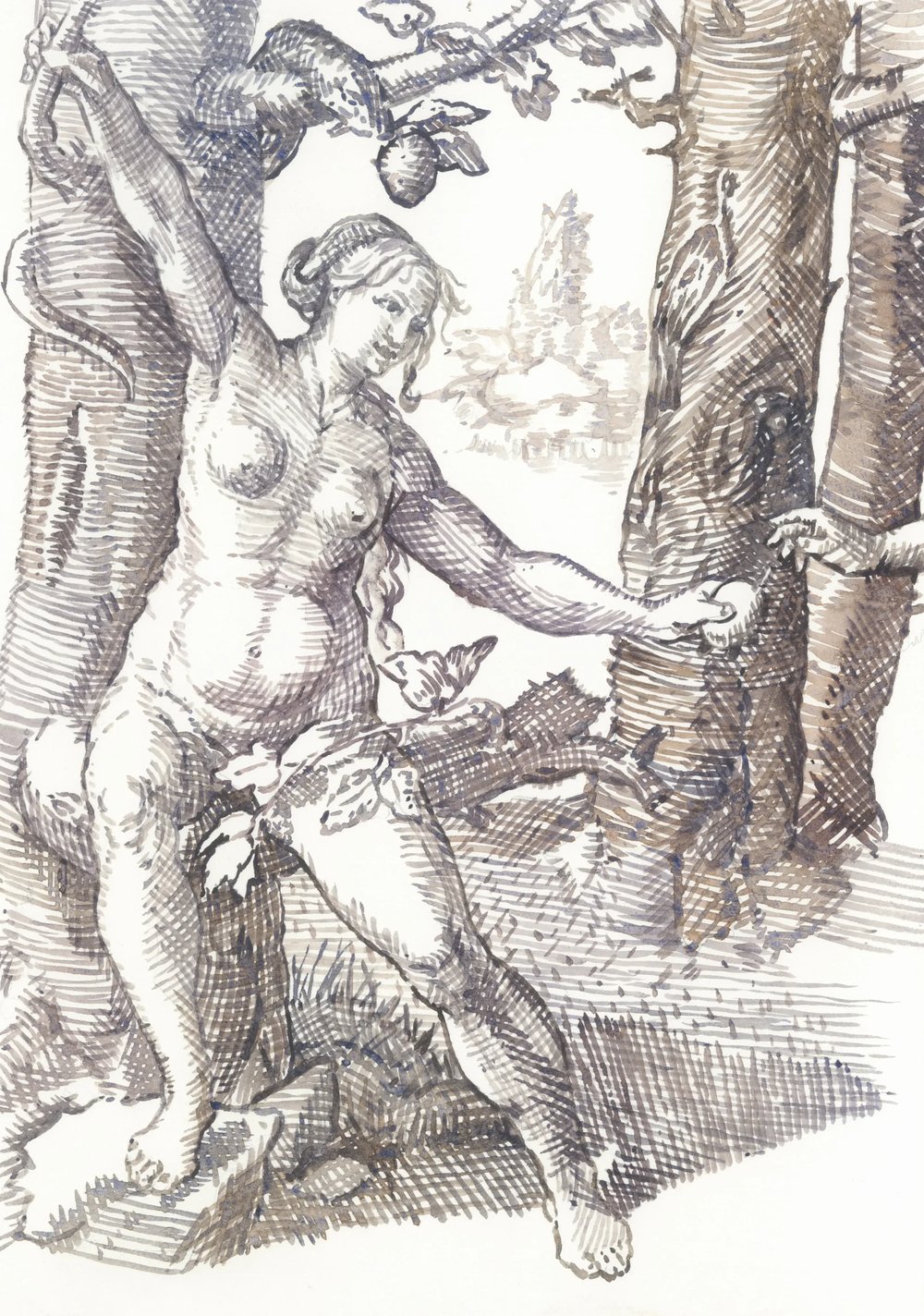
After Lucas van Leyden
Eve Seducing Adam 1529
2025 Watercolour on Paper 21x29.7cm
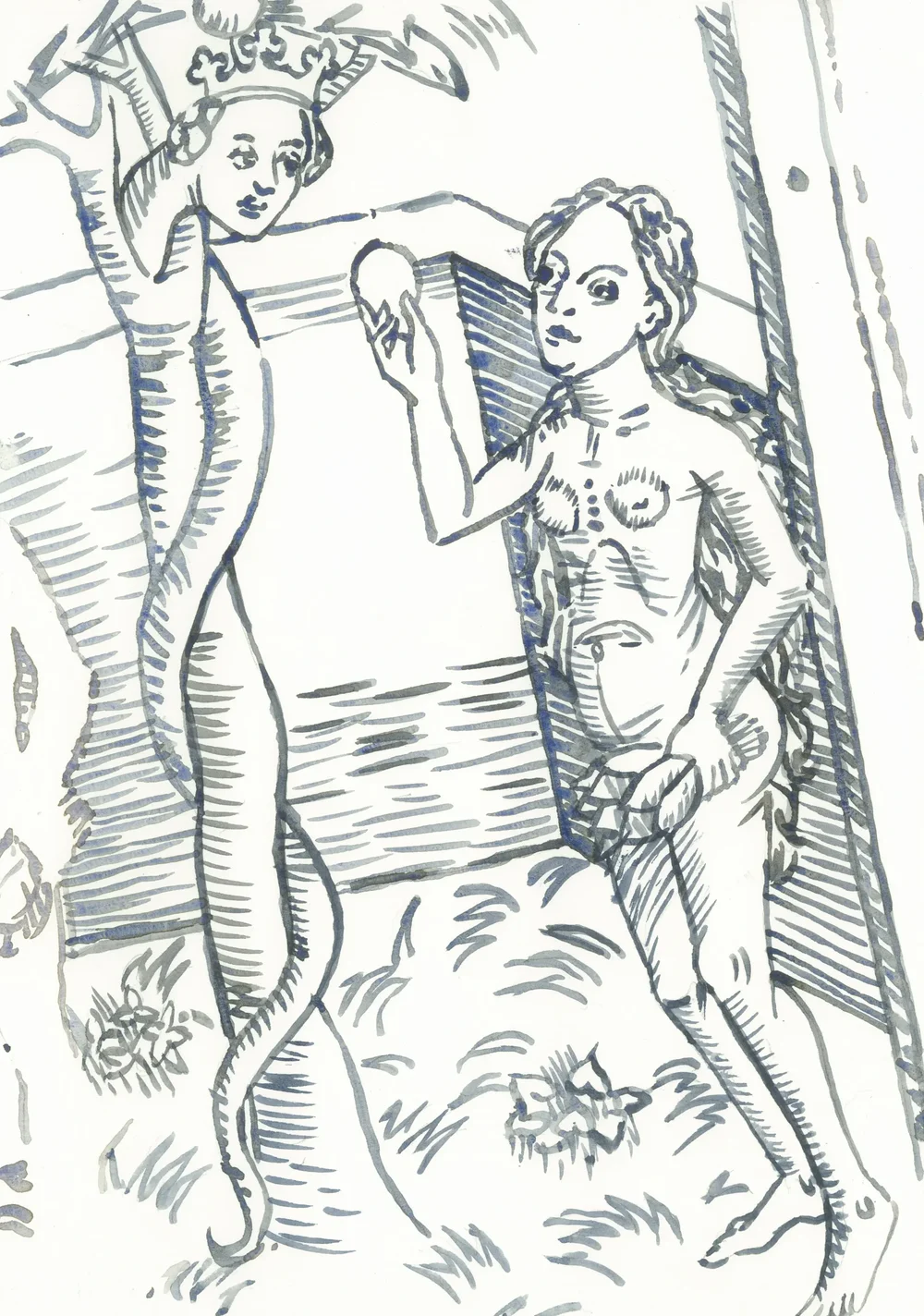
After Conrad and Dinckmut
Seelen Wurz garten 1483
2025 Watercolour on Paper 21x29.7cm
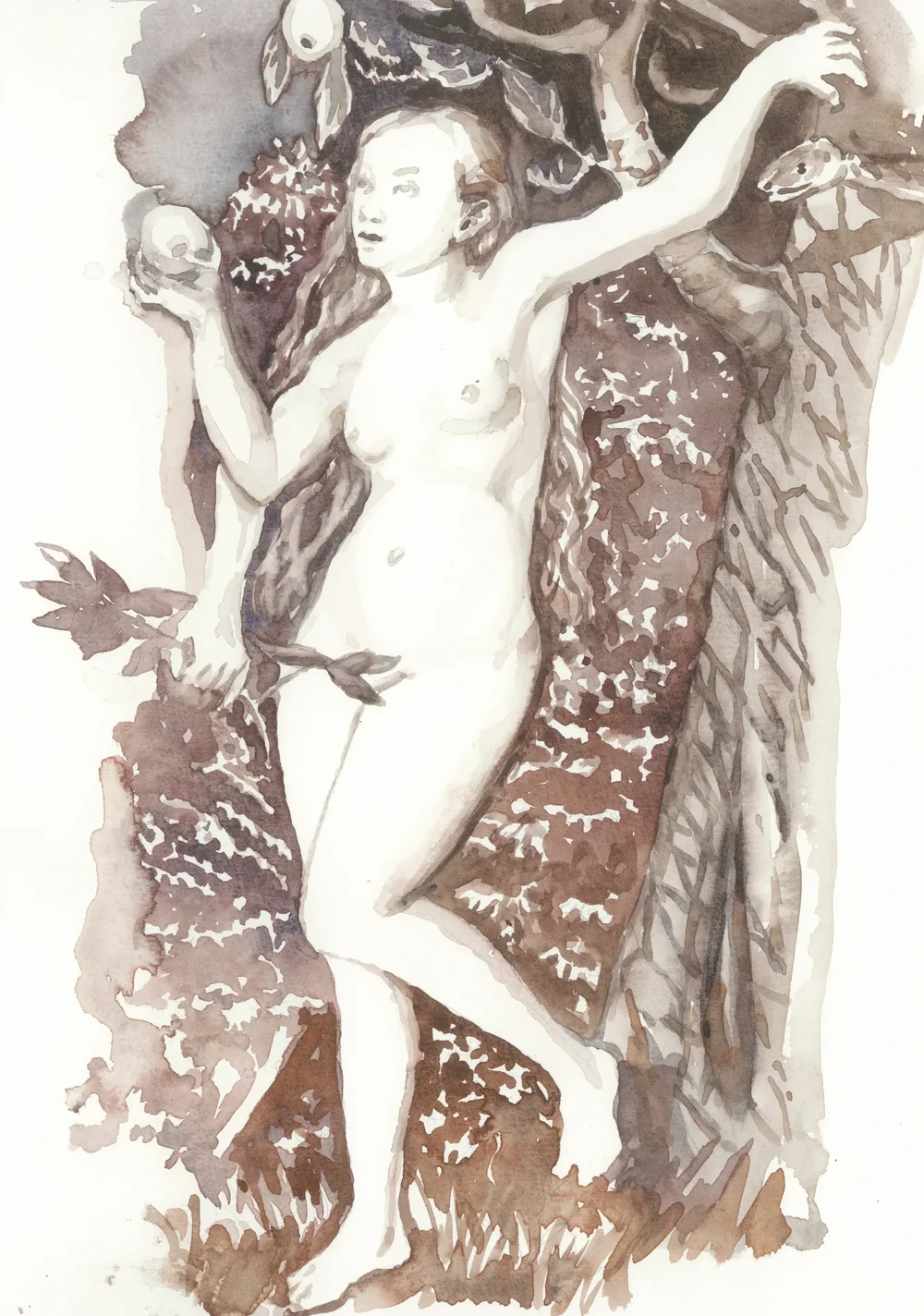
After Lucas Cranach the Elder
Adam and Eve 1537
2025 Watercolour on Paper 21x29.7cm
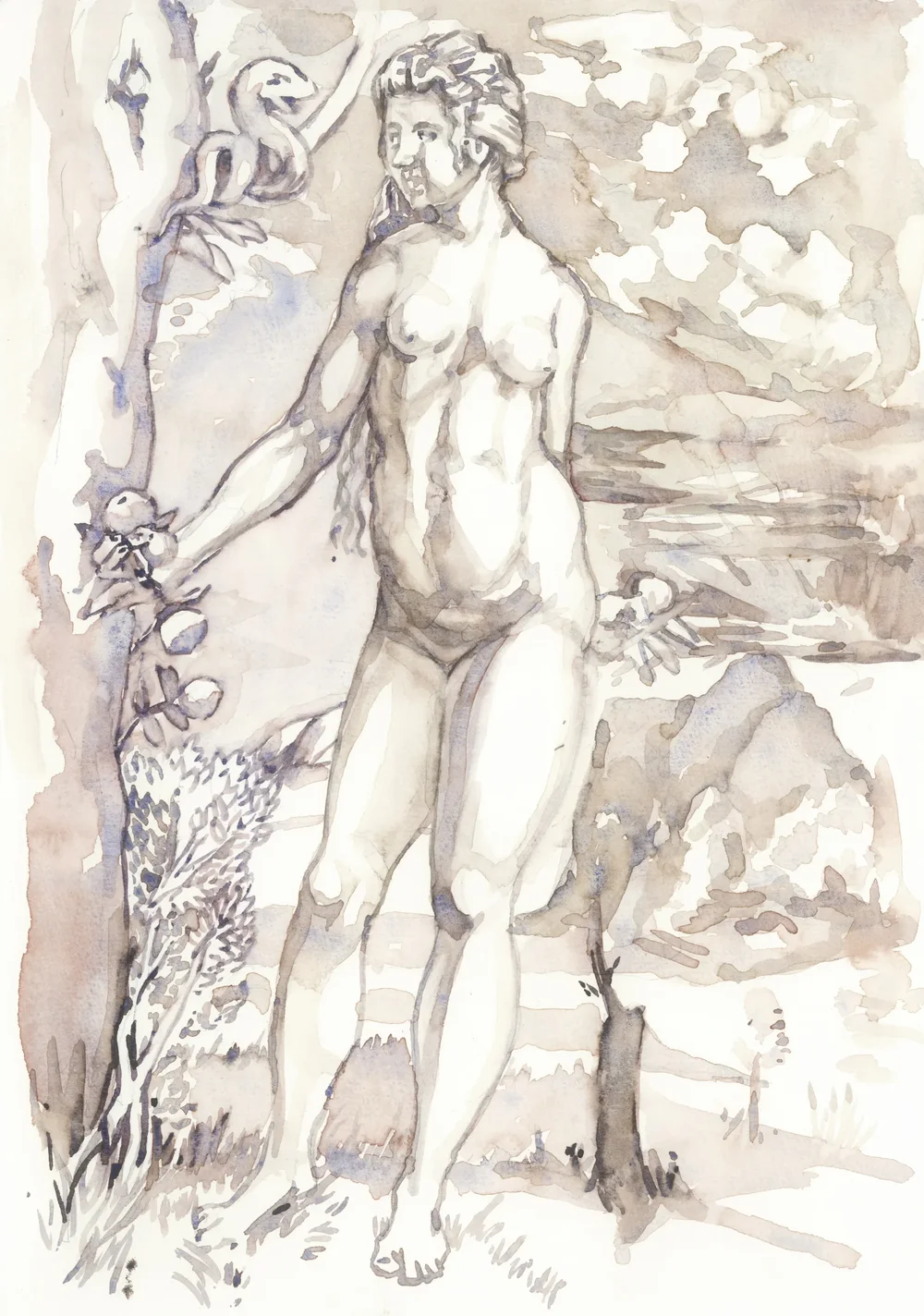
After Johann Ladenspelder
Eve 1511-1560
2025 Watercolour on Paper 21x29.7cm
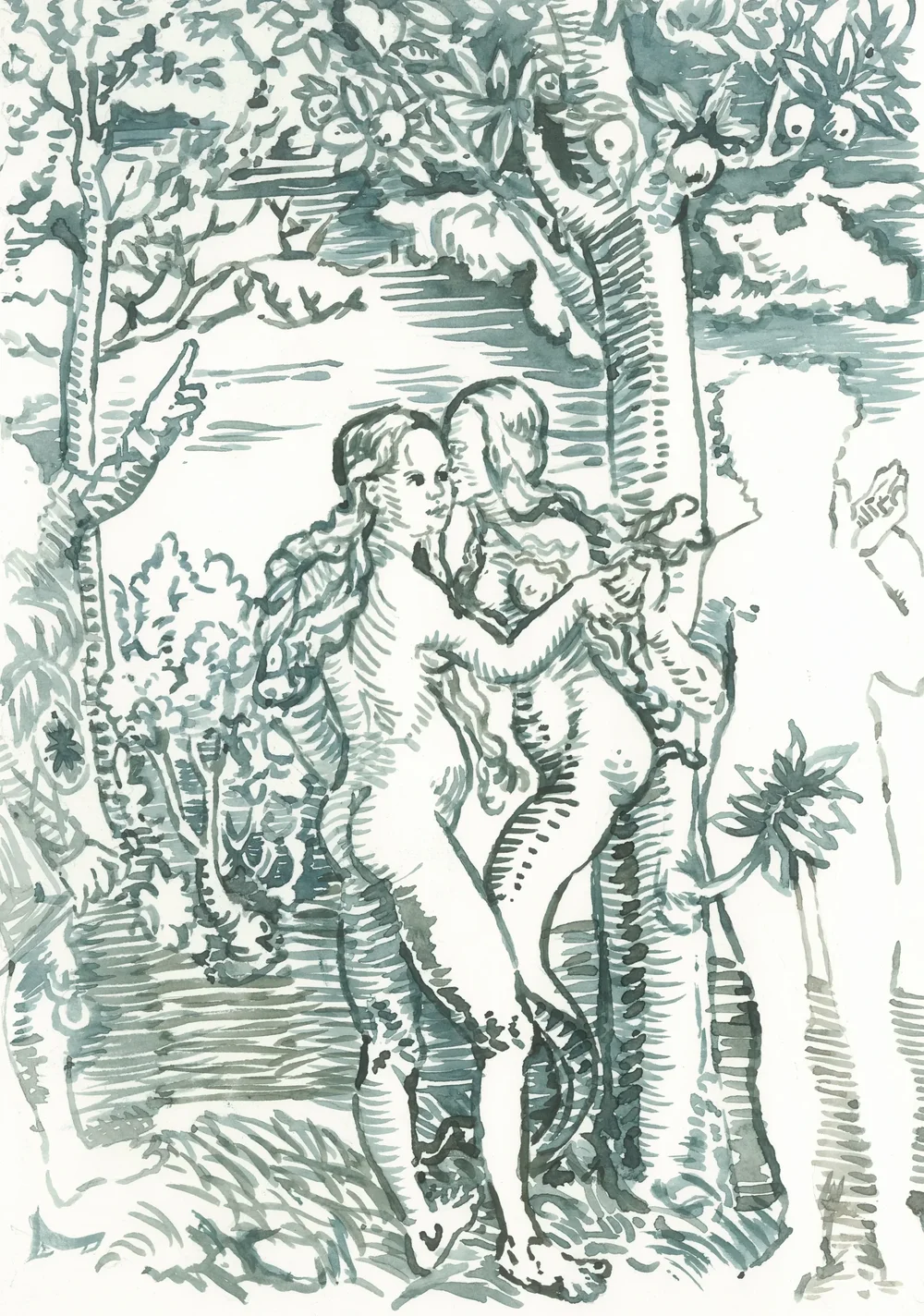
After Lucas Cranach the Elder
The Fall of Man 1522
2025 Watercolour on Paper 21x29.7cm
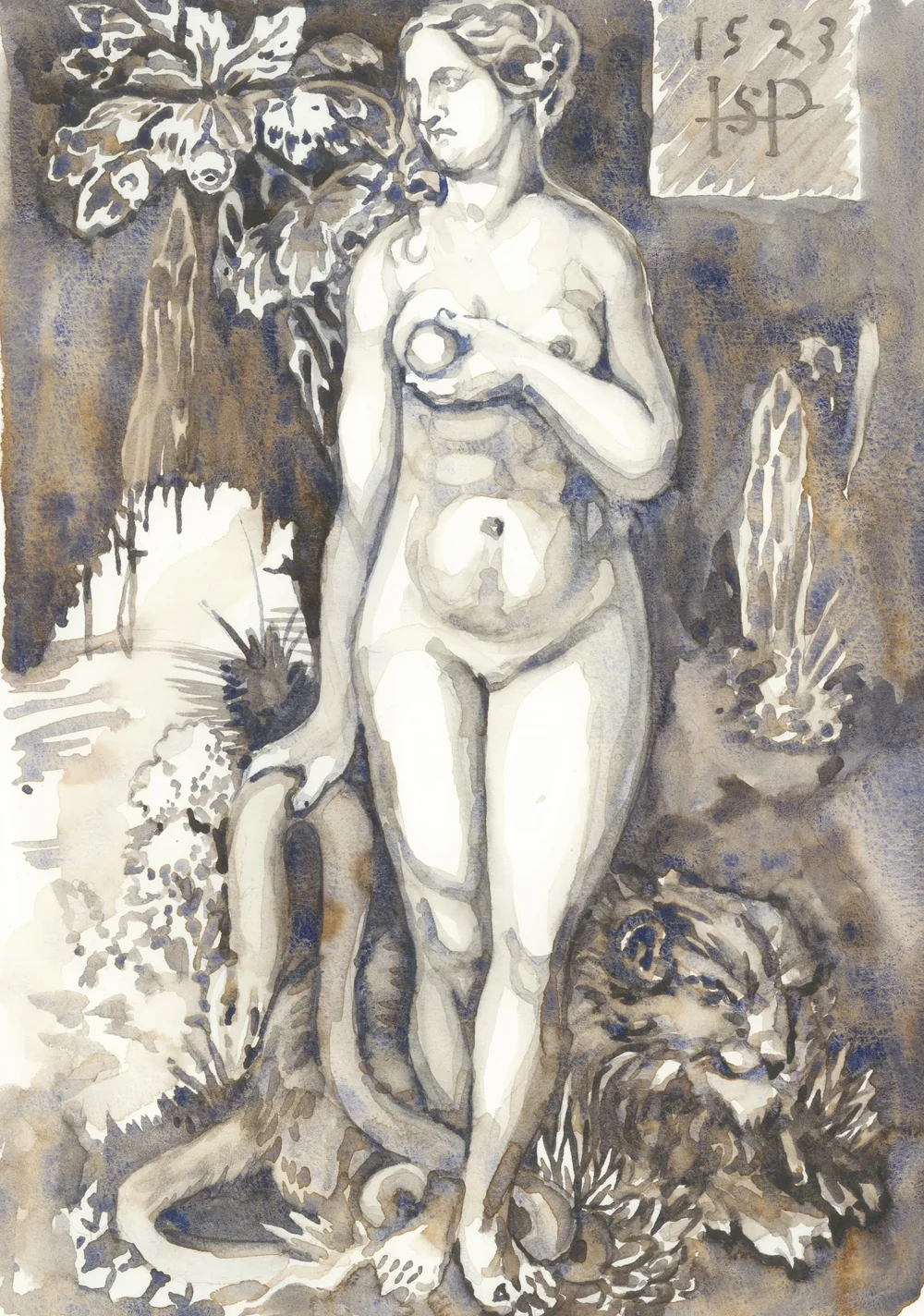
After Sebald Beham
Eve Standing 1519-1523
2025 Watercolour on Paper 21x29.7cm
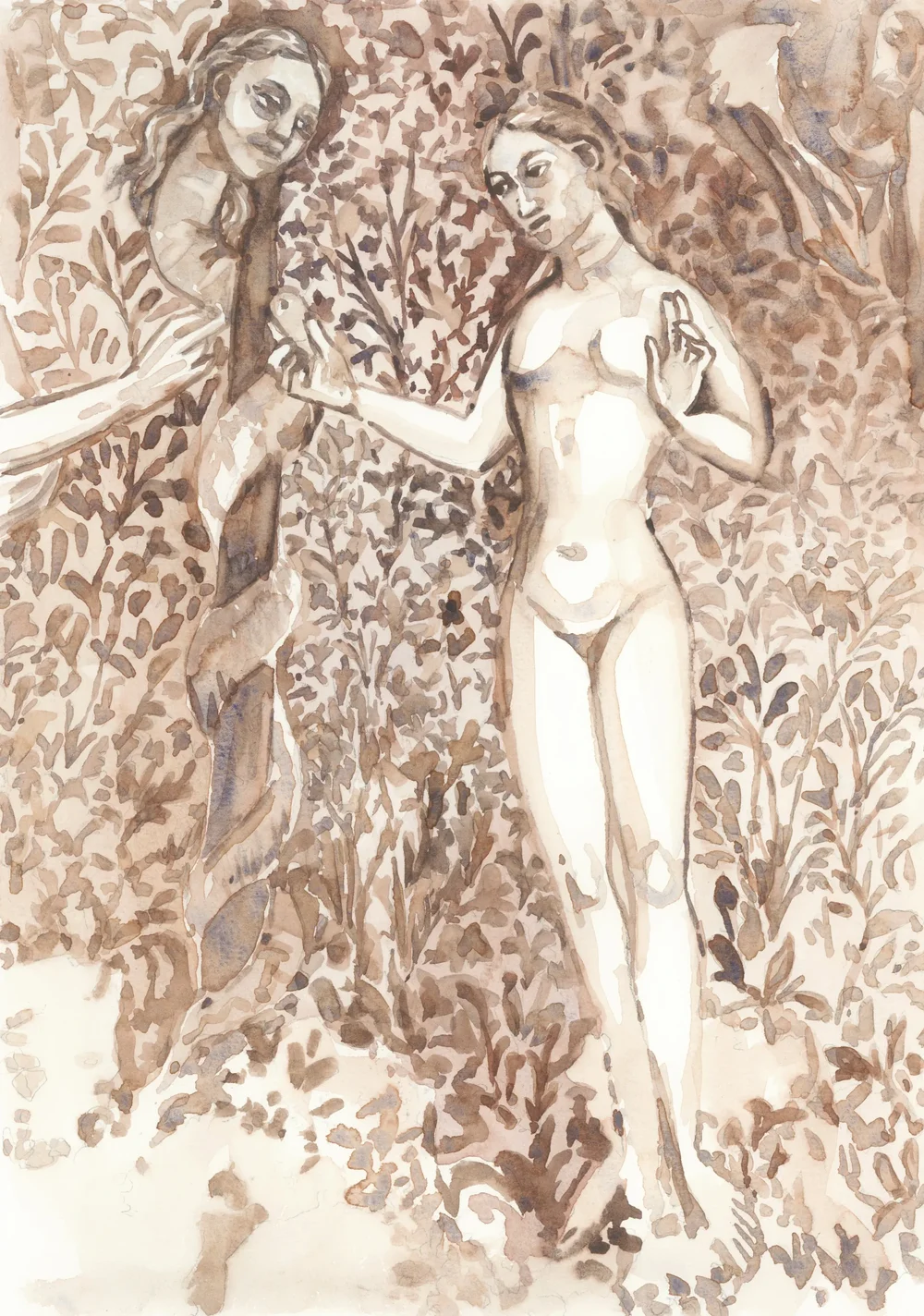
After Niccolò di Tommaso and Antonio Vite
Genesis Cycle 1372
2025 Watercolour on Paper 21x29.7cm
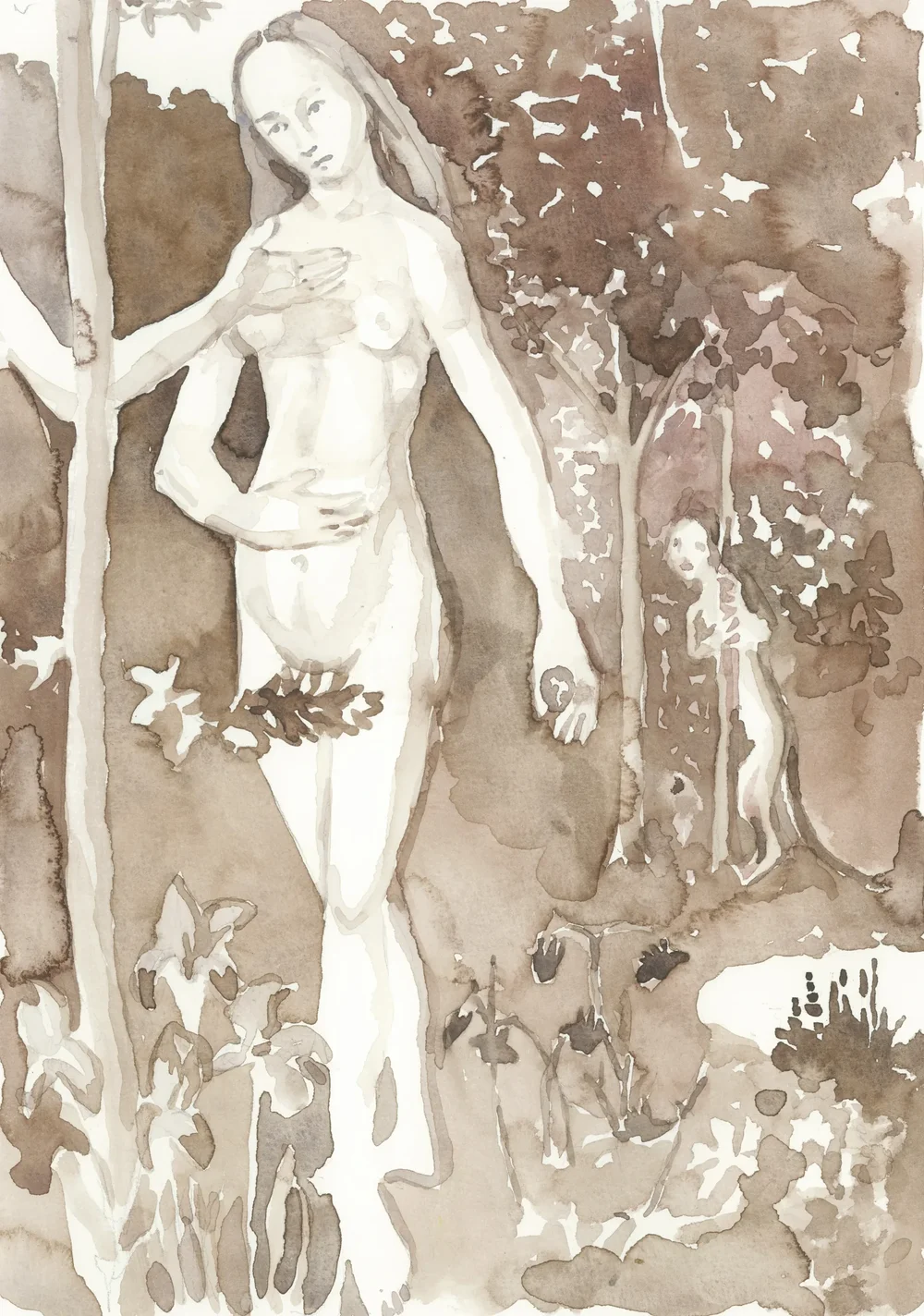
After Master of the Embroidered Foliage
Adam and Eve in the Garden of Eden 1480-1510
2025 Watercolour on Paper 21x29.7cm
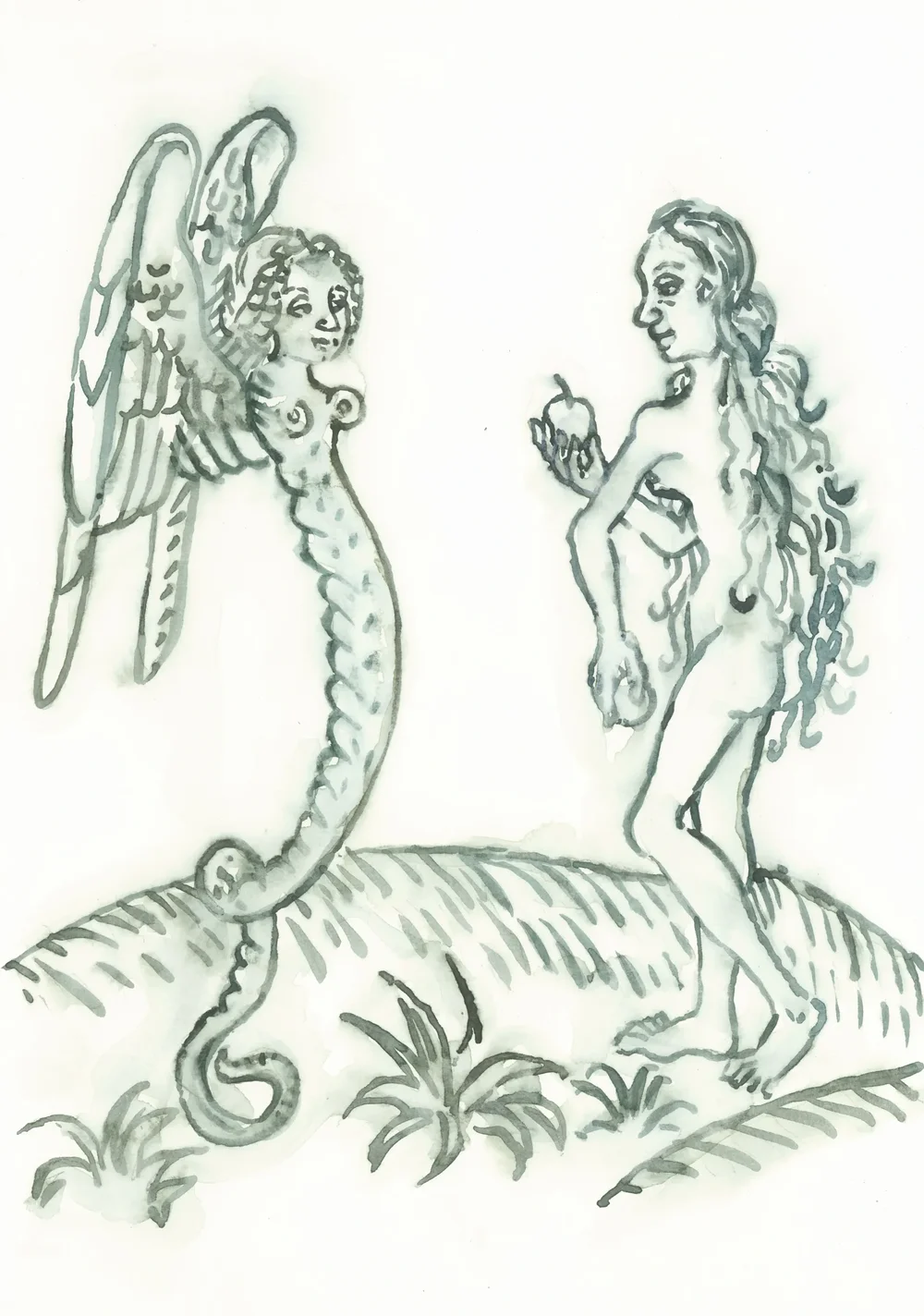
After Peter Drach and Bernard Richel
Eva e a Serpente The Temptation of Eve 1480
2025 Watercolour on Paper 21x29.7cm
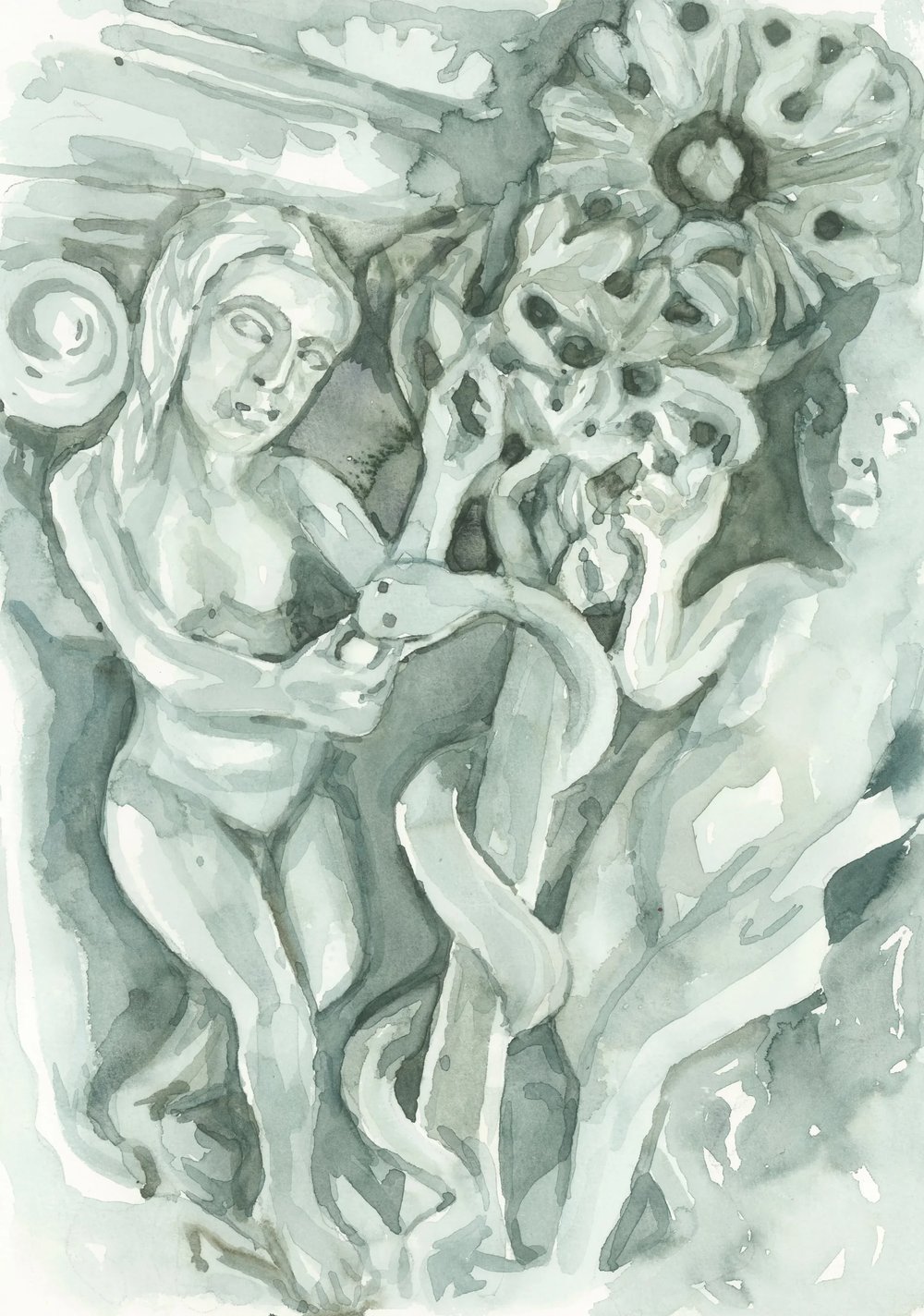
After Stone carving in Monreale Cathedral
Fall of Man 1174-1189
2025 Watercolour on Paper 21x29.7cm
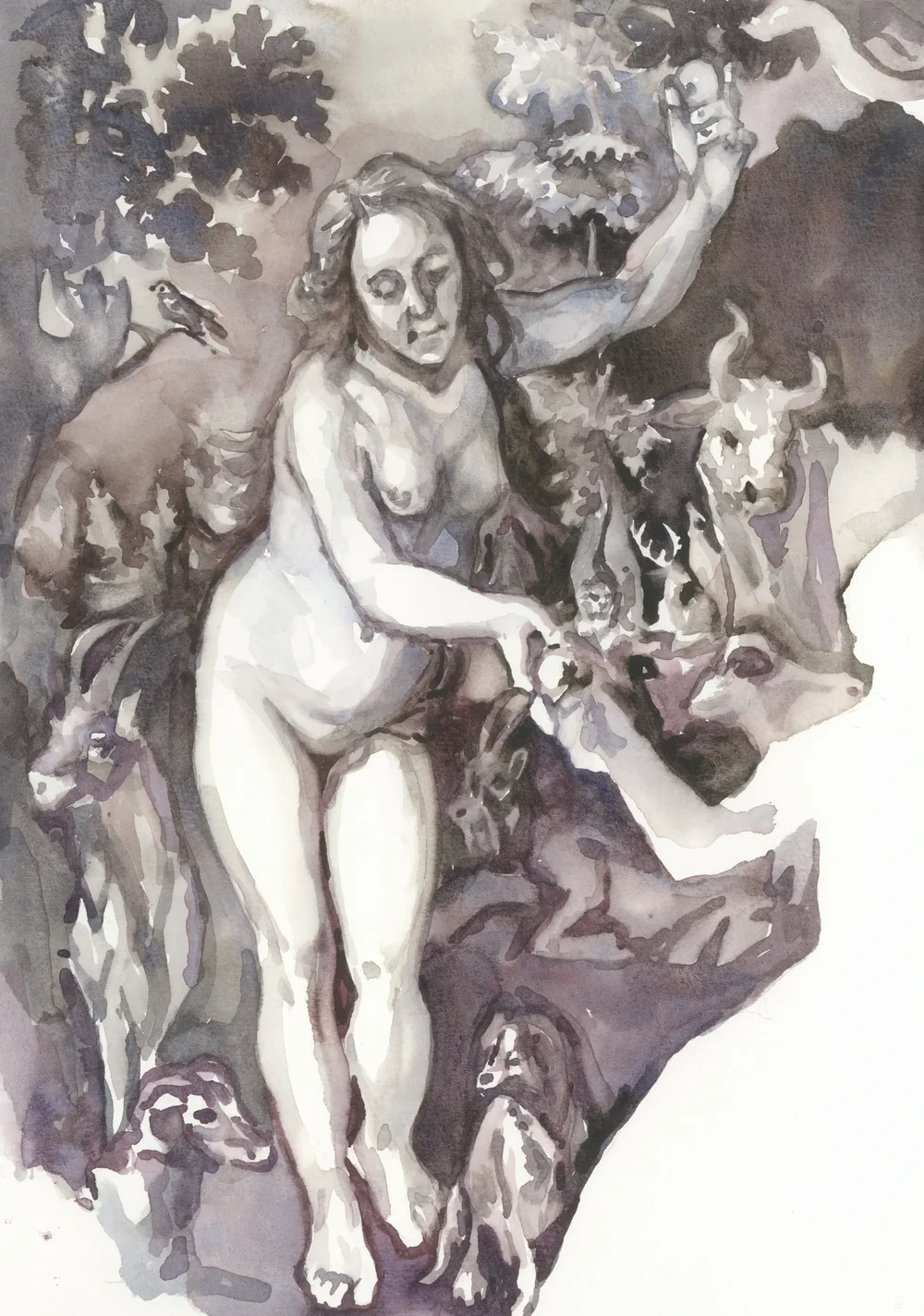
After Joachim Anthonisz Wtewael
The Temptation of Adam and Eve 1614
2025 Watercolour on Paper 21x29.7cm
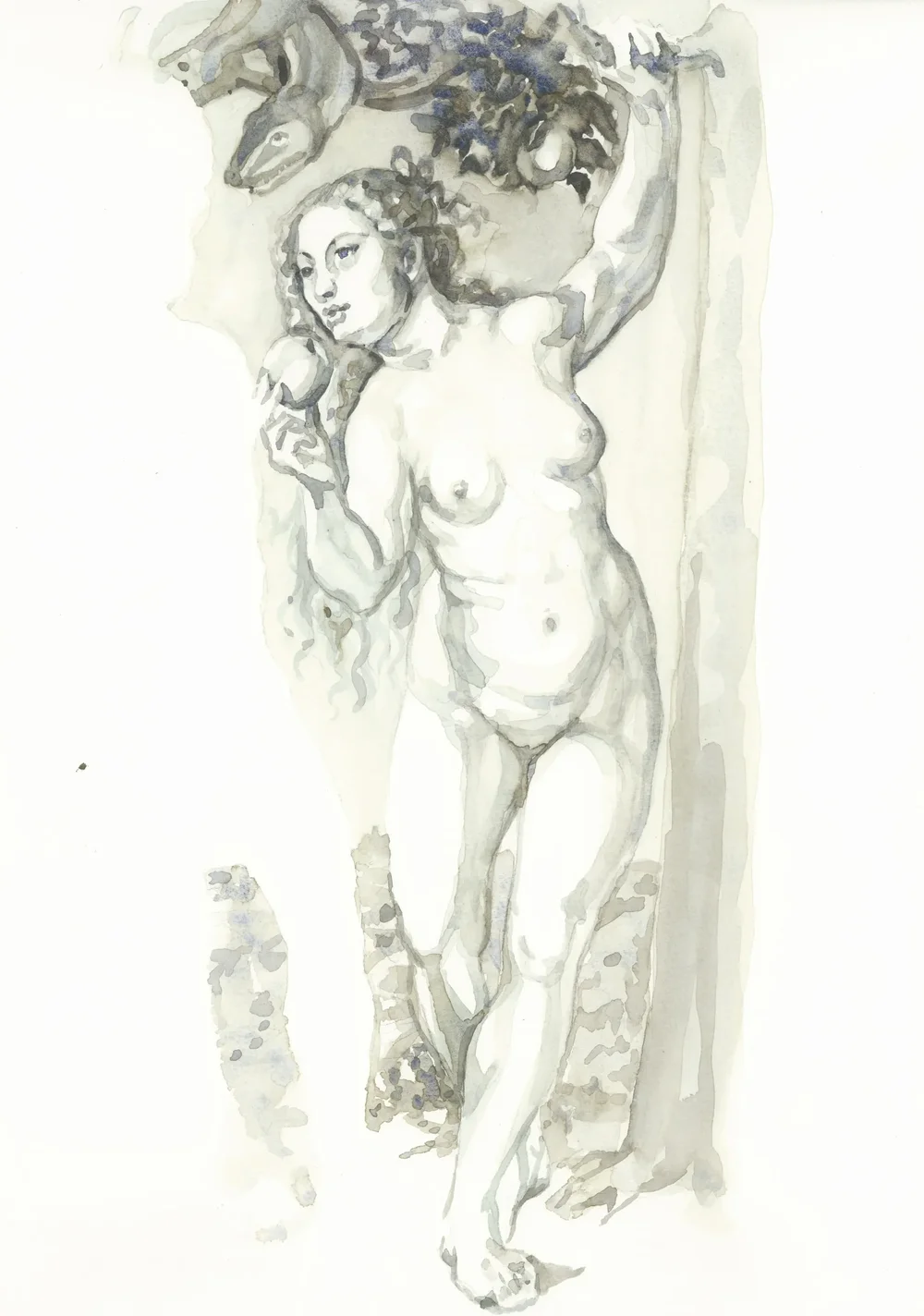
After Jan Gossaert
Der Sündenfall 1520-1535
2025 Watercolour on Paper 21x29.7cm
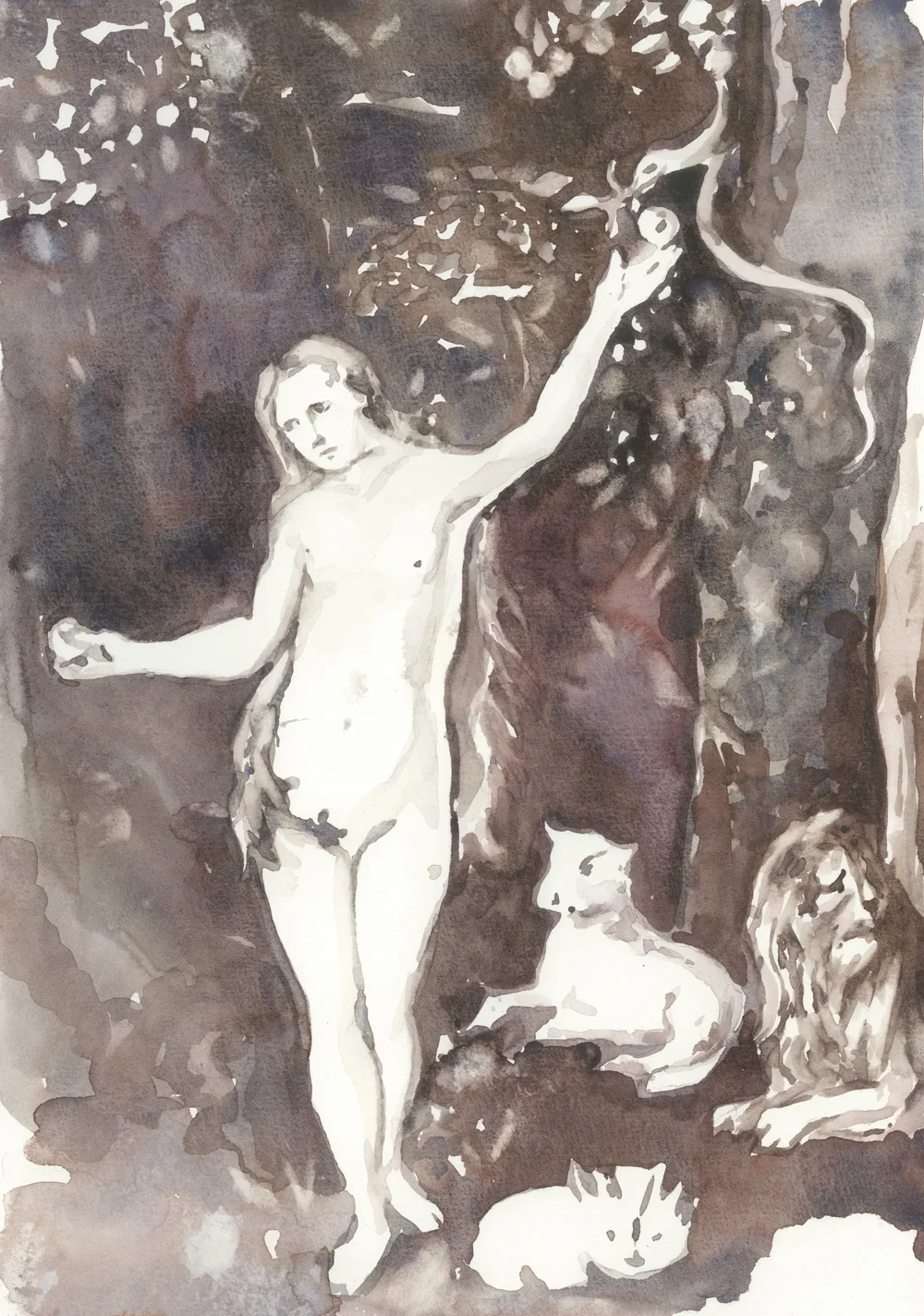
After J. Vrielincx
Adam and Eve receiving the forbidden fruit 17th century
2025 Watercolour on Paper 21x29.7cm
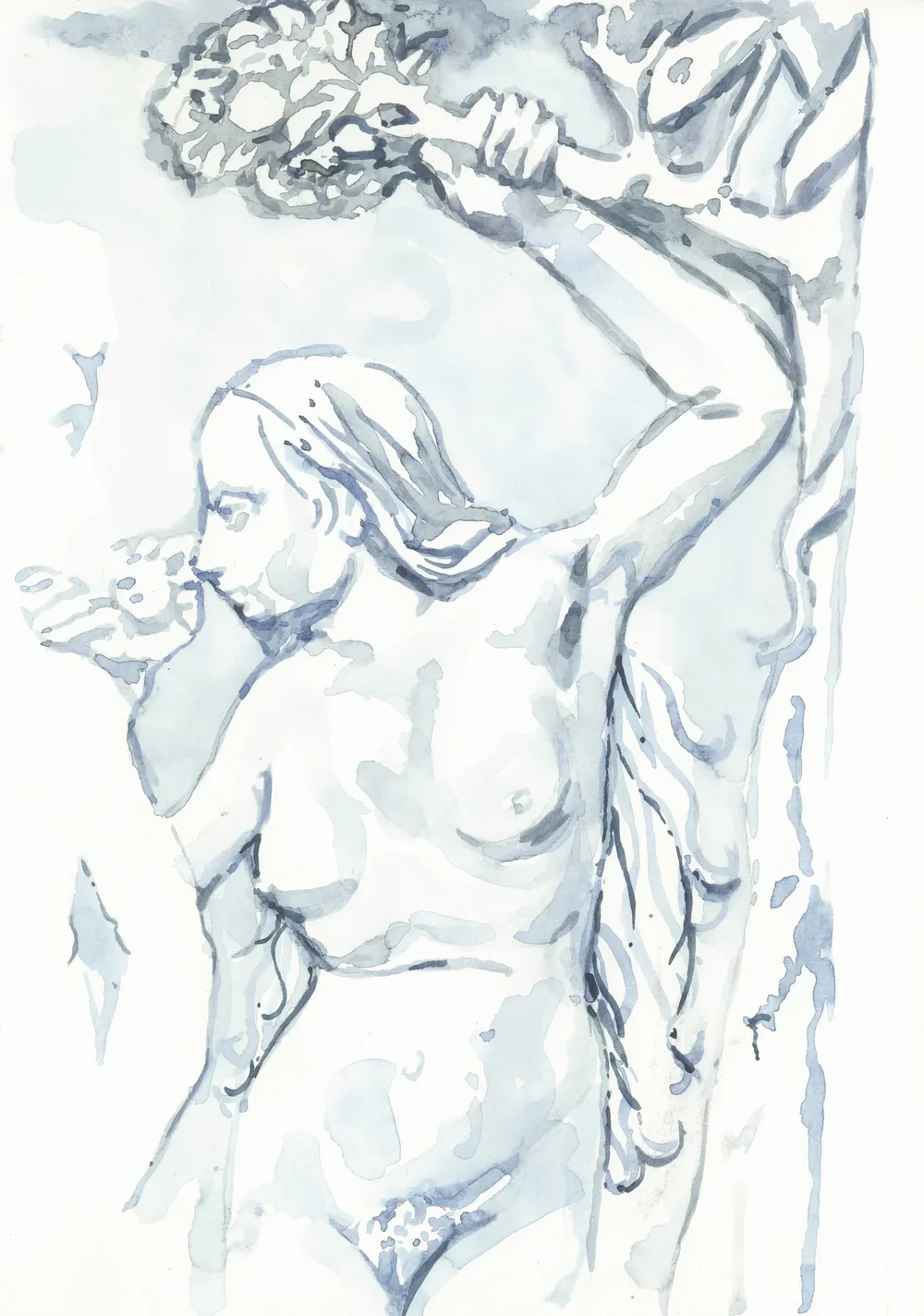
After Ludwig Krug
Adam and Eve, The Fall of Man 1514
2025 Watercolour on Paper 21x29.7cm
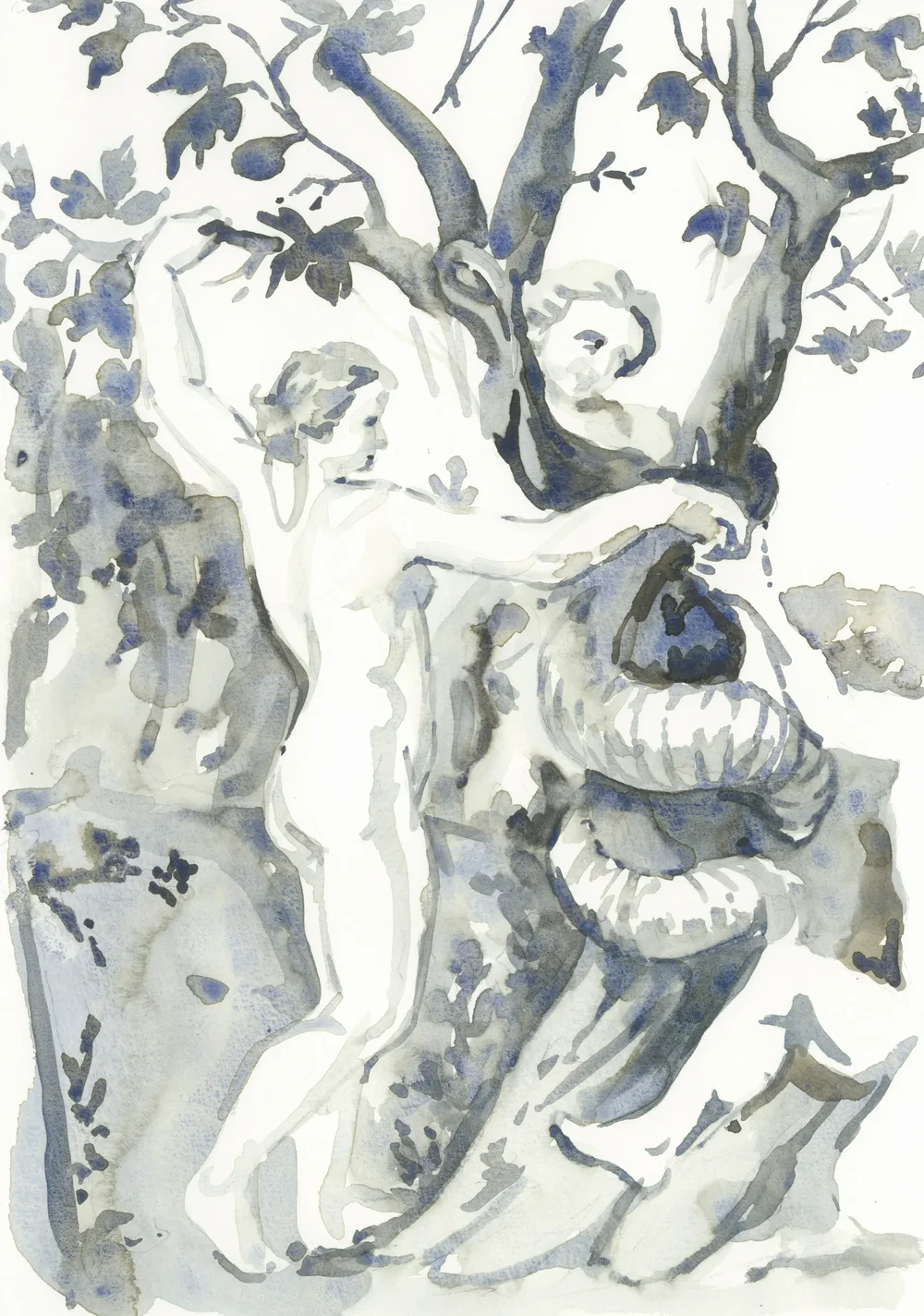
After Orazio Borgianni
Adam et Eve Manger le Fruit Interdit 1578-1616
2025 Watercolour on Paper 21x29.7cm
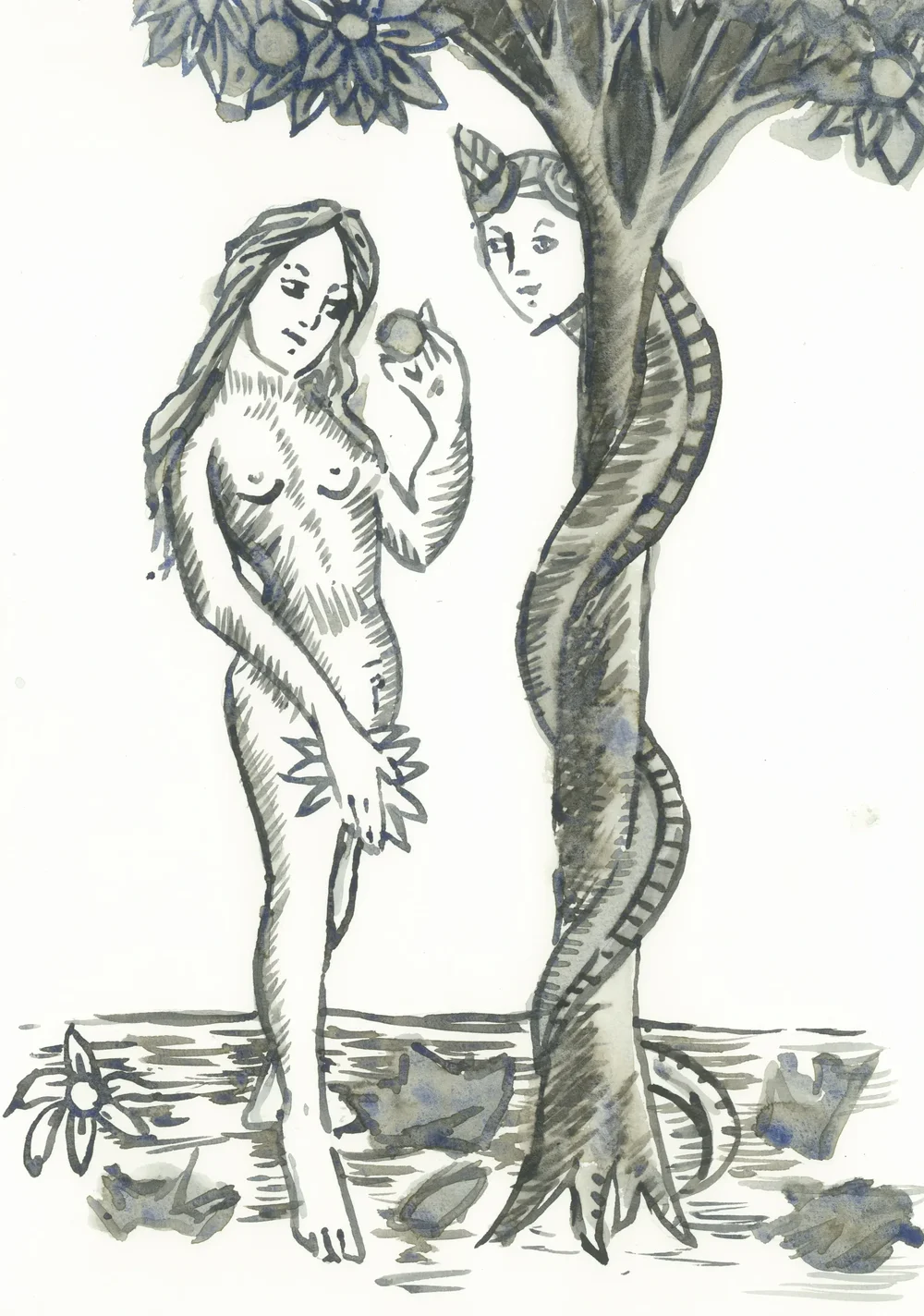
After Netherlandish woodcut
15th century
2025 Watercolour on Paper 21x29.7cm
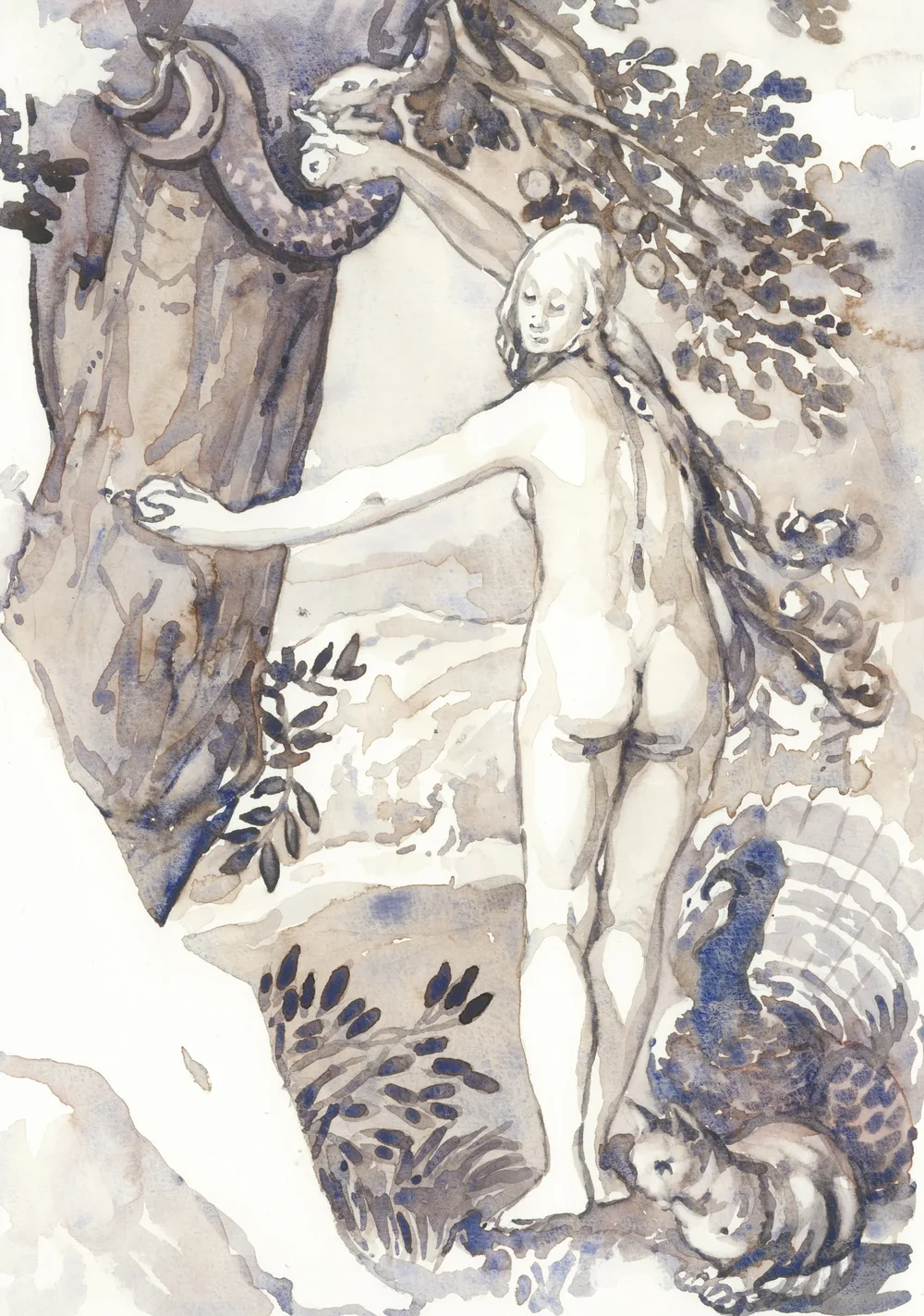
After Jan (Pietersz.) Saenredam, after Abraham Bloemaert
Eve Giving Adam the Forbidden Fruit 1604
2025 Watercolour on Paper 21x29.7cm
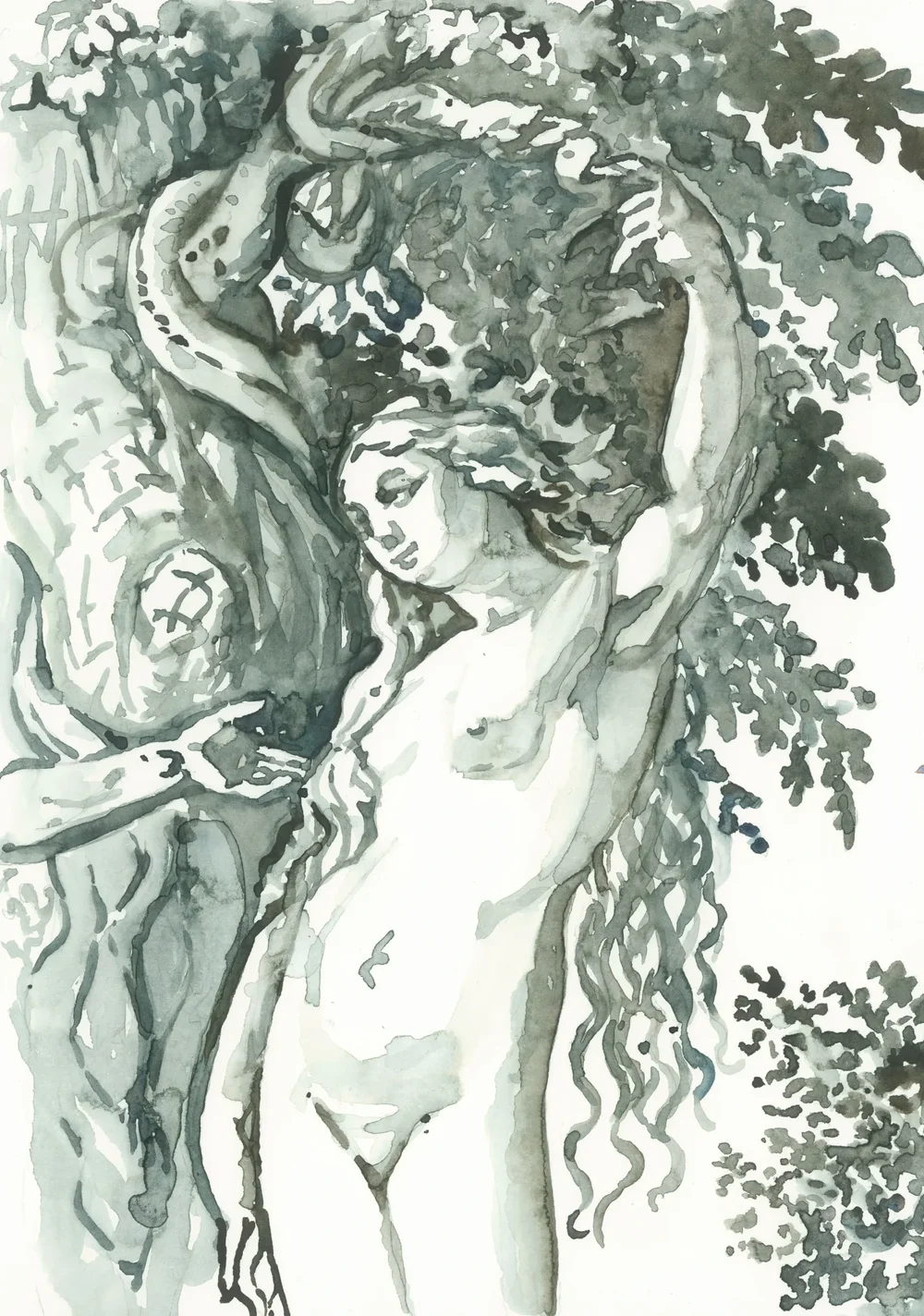
After Hendrick Goltzius
The Fall of Man (Adam and Eve) 1585
2025 Watercolour on Paper 21x29.7cm
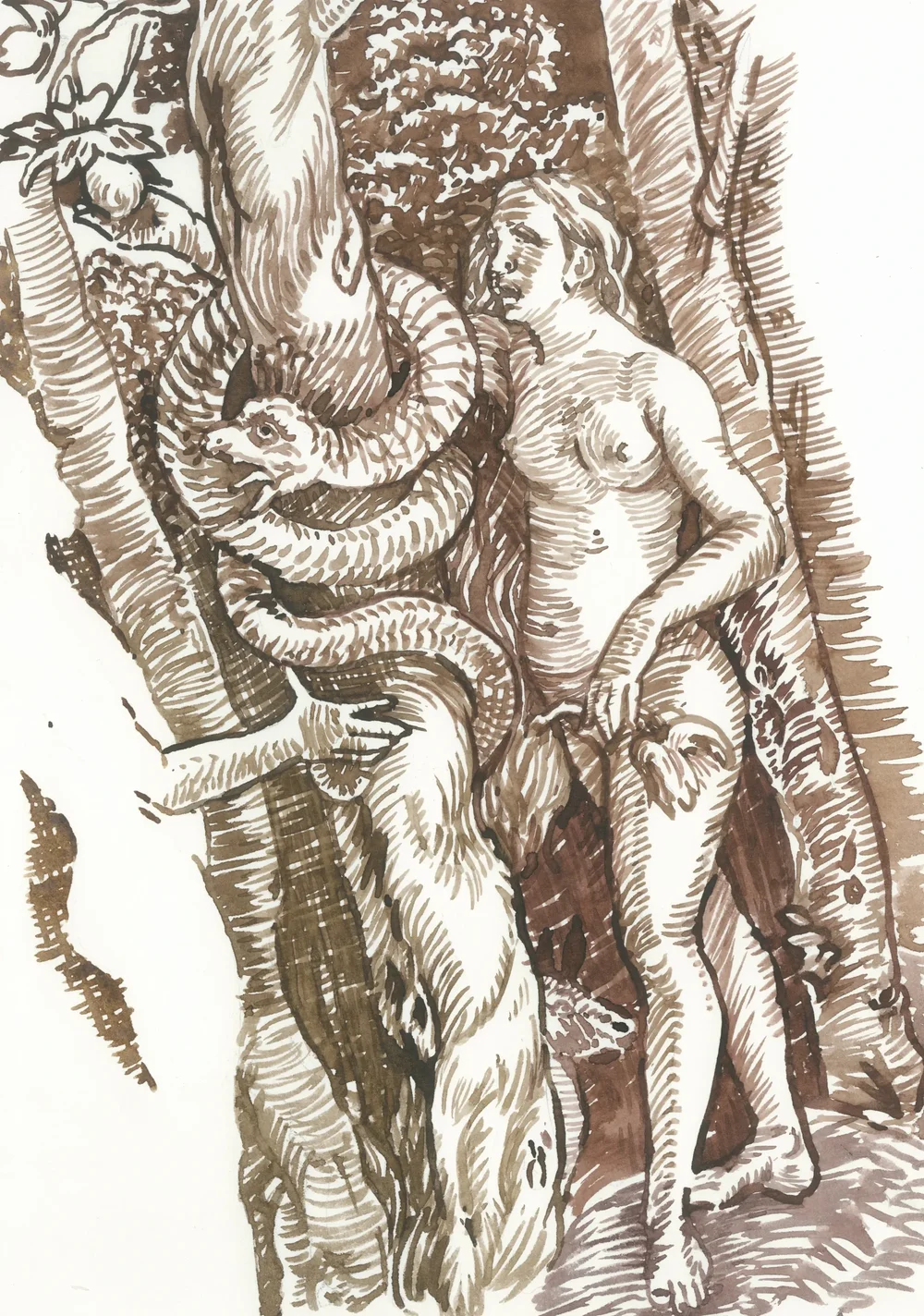
After Hans Baldung
Adam and Eve with the Serpent 1514
2025 Watercolour on Paper 21x29.7cm
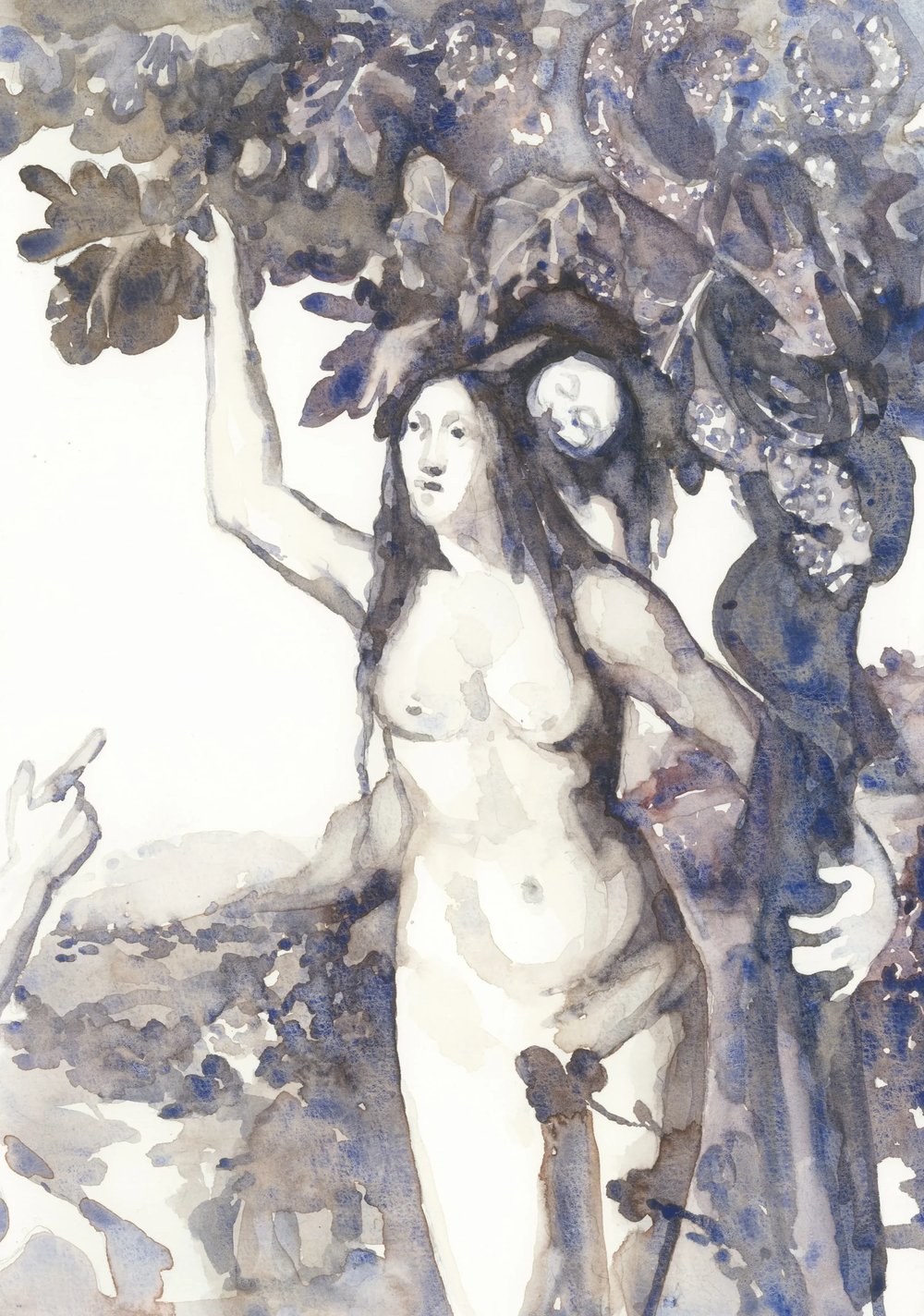
After Mariotto Albertinelli
The Temptation of Adam and Eve 1509-1513
2025 Watercolour on Paper 21x29.7cm
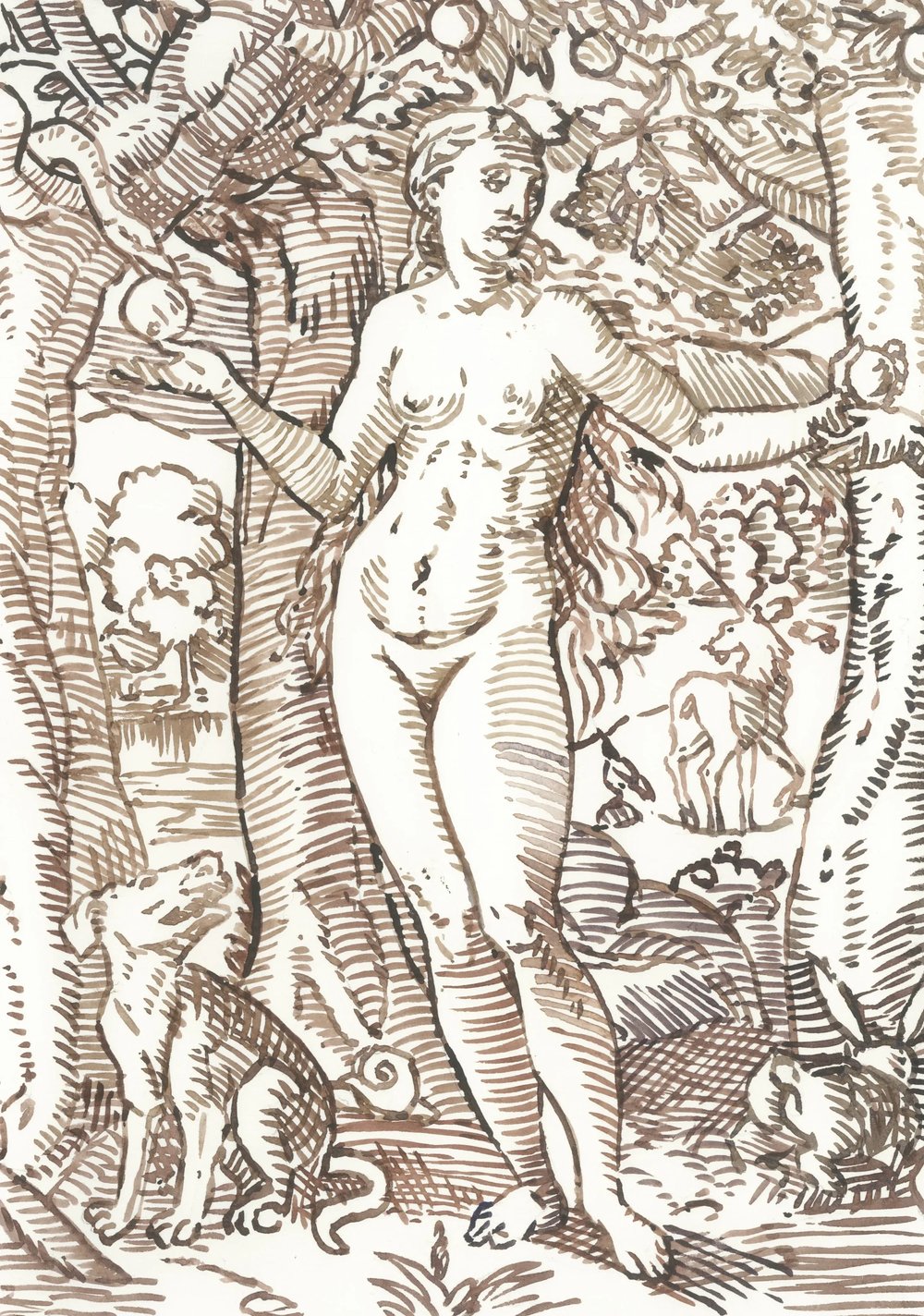
After Jost Amman
no. 3377 1591
2025 Watercolour on Paper 21x29.7cm
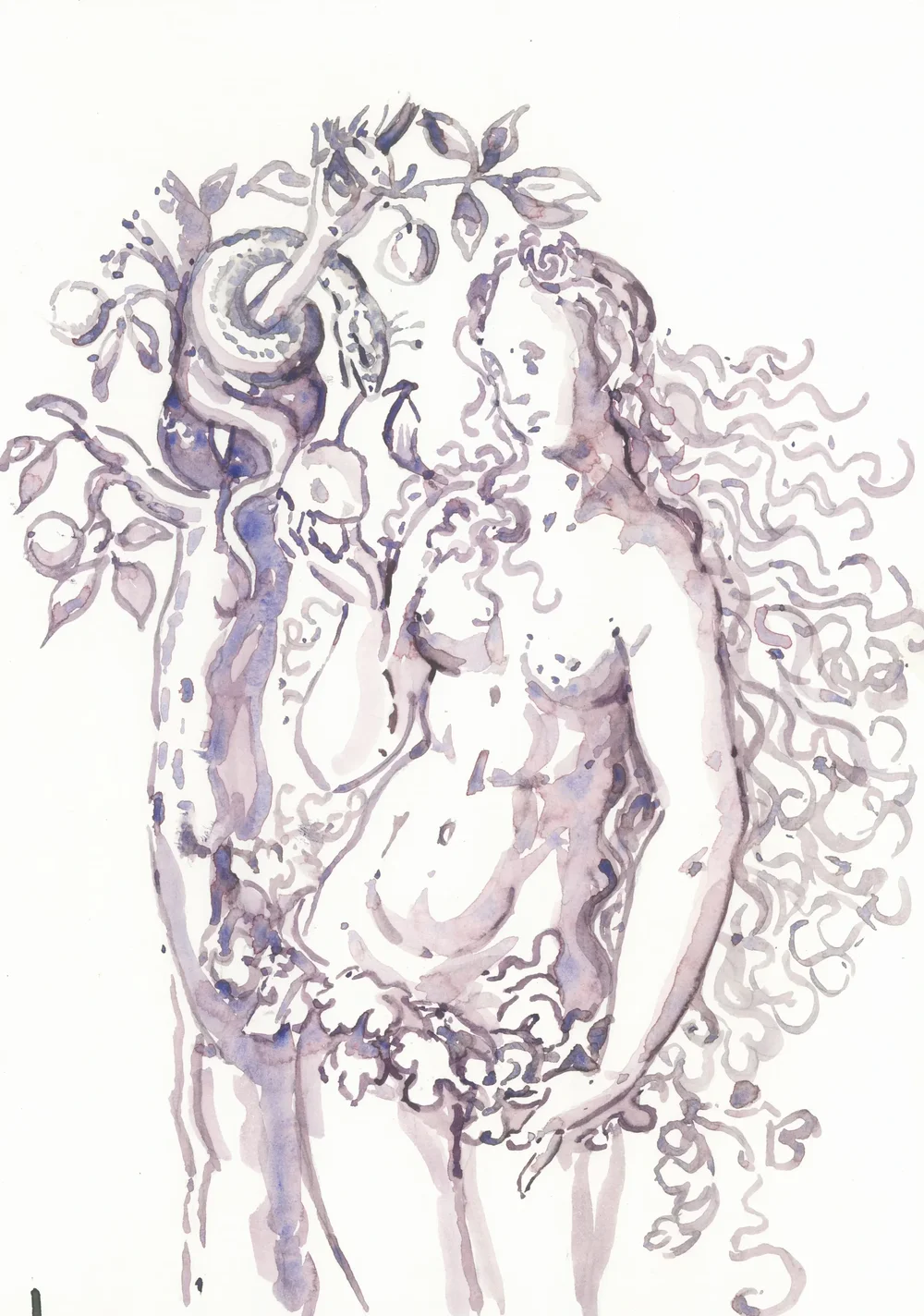
After Jost Amman
Eve the Bearer 1568-1596
2025 Watercolour on Paper 21x29.7cm
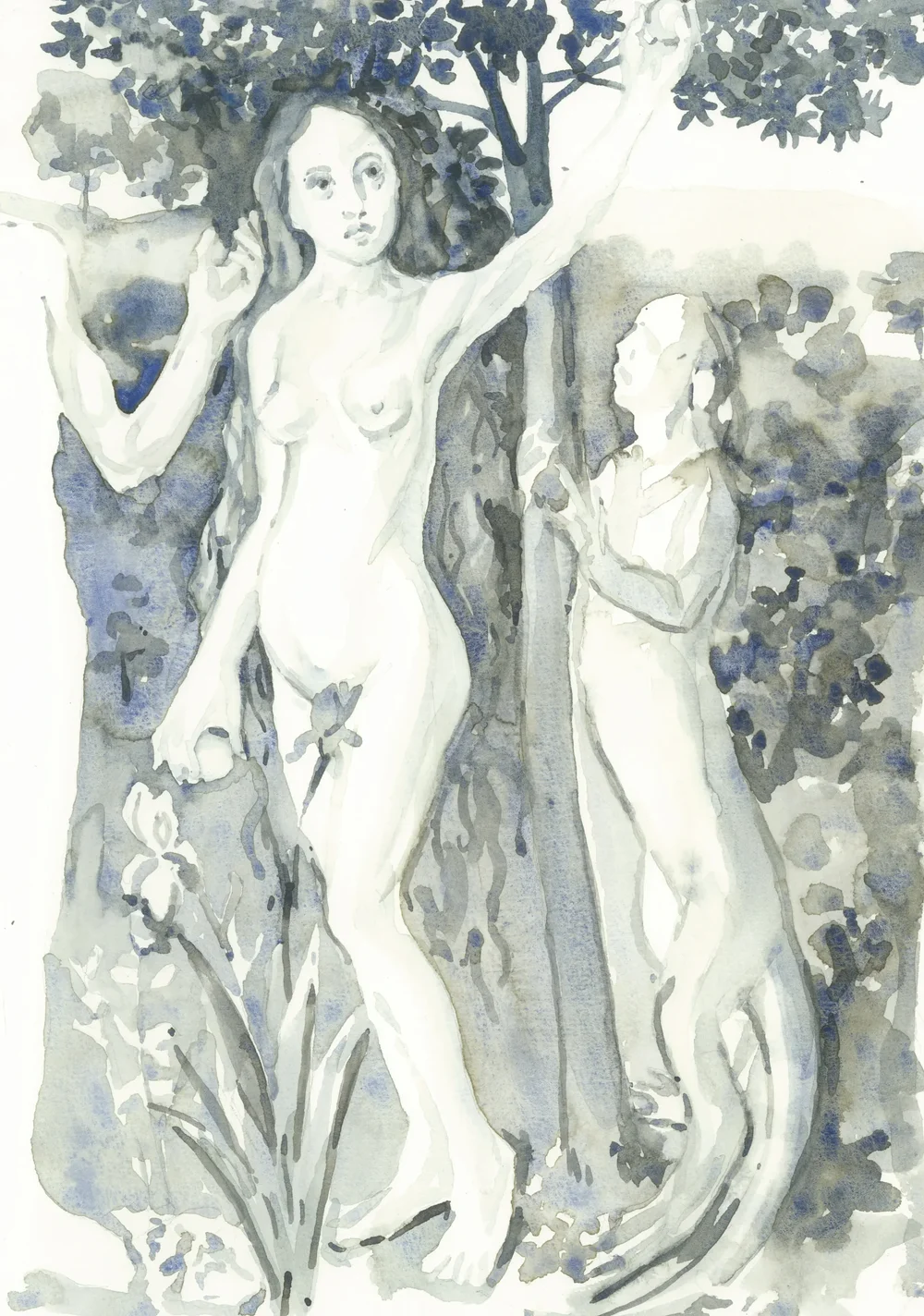
After Hugo Van der Goes
Diptychon mit Sündenfall und Erlösung 1479
2025 Watercolour on Paper 21x29.7cm
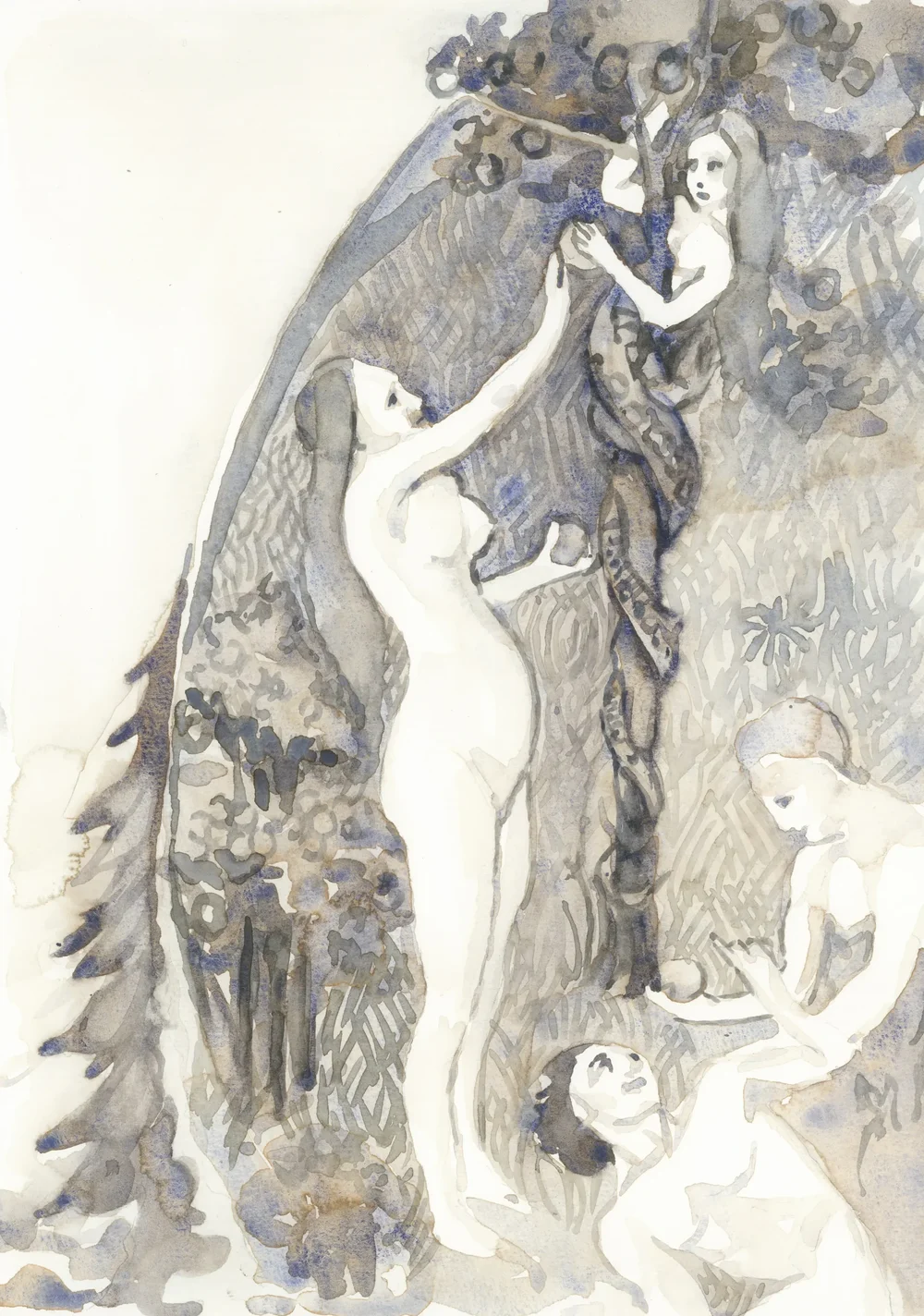
After Limbourg Brothers
The Expulsion of Adam and Eve from Paradise 1416
2025 Watercolour on Paper 21x29.7cm
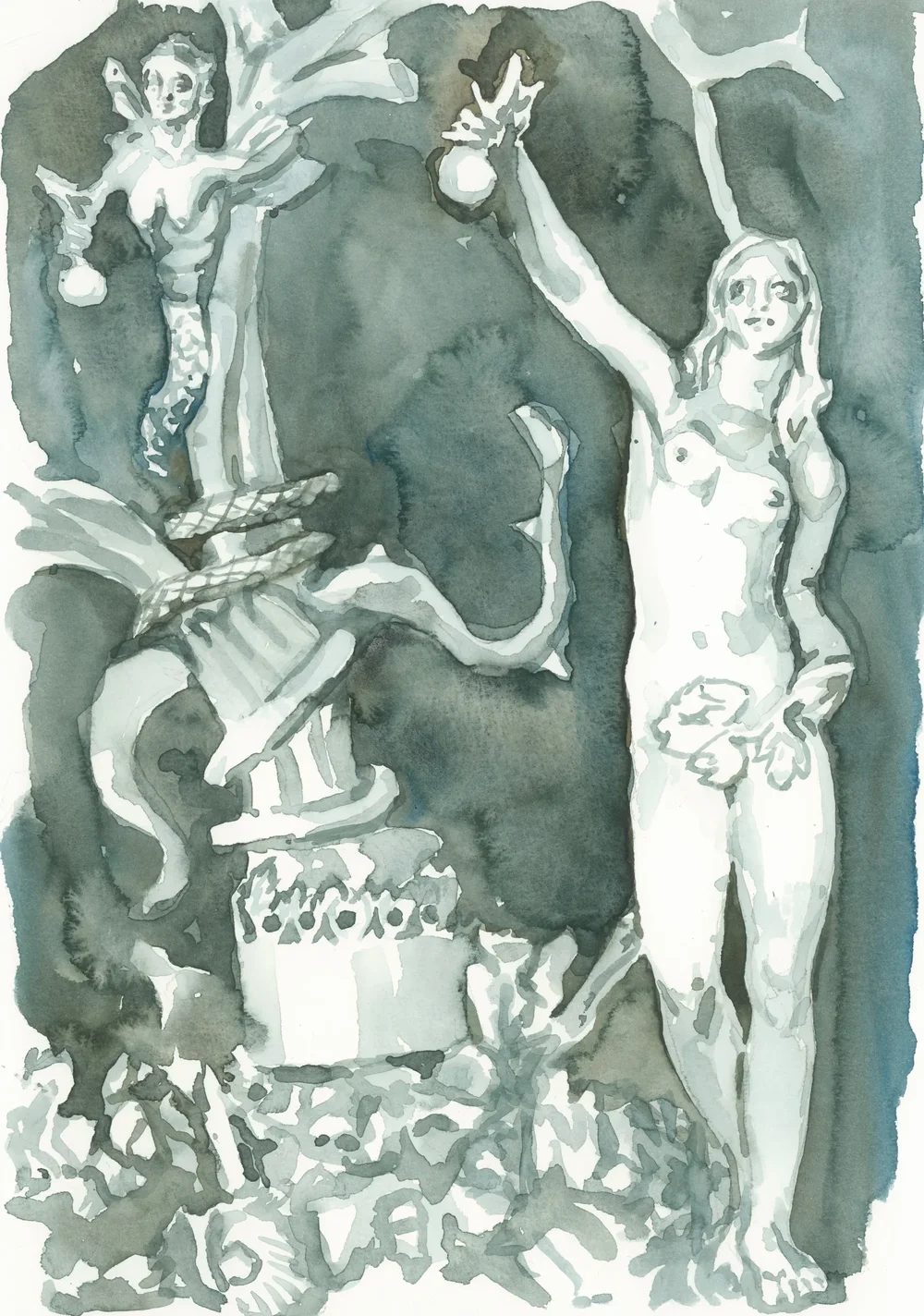
After Hans Kellner
Adam and Eve in Front of the Tree of Knowledge 1603-1609
2025 Watercolour on Paper 21x29.7cm
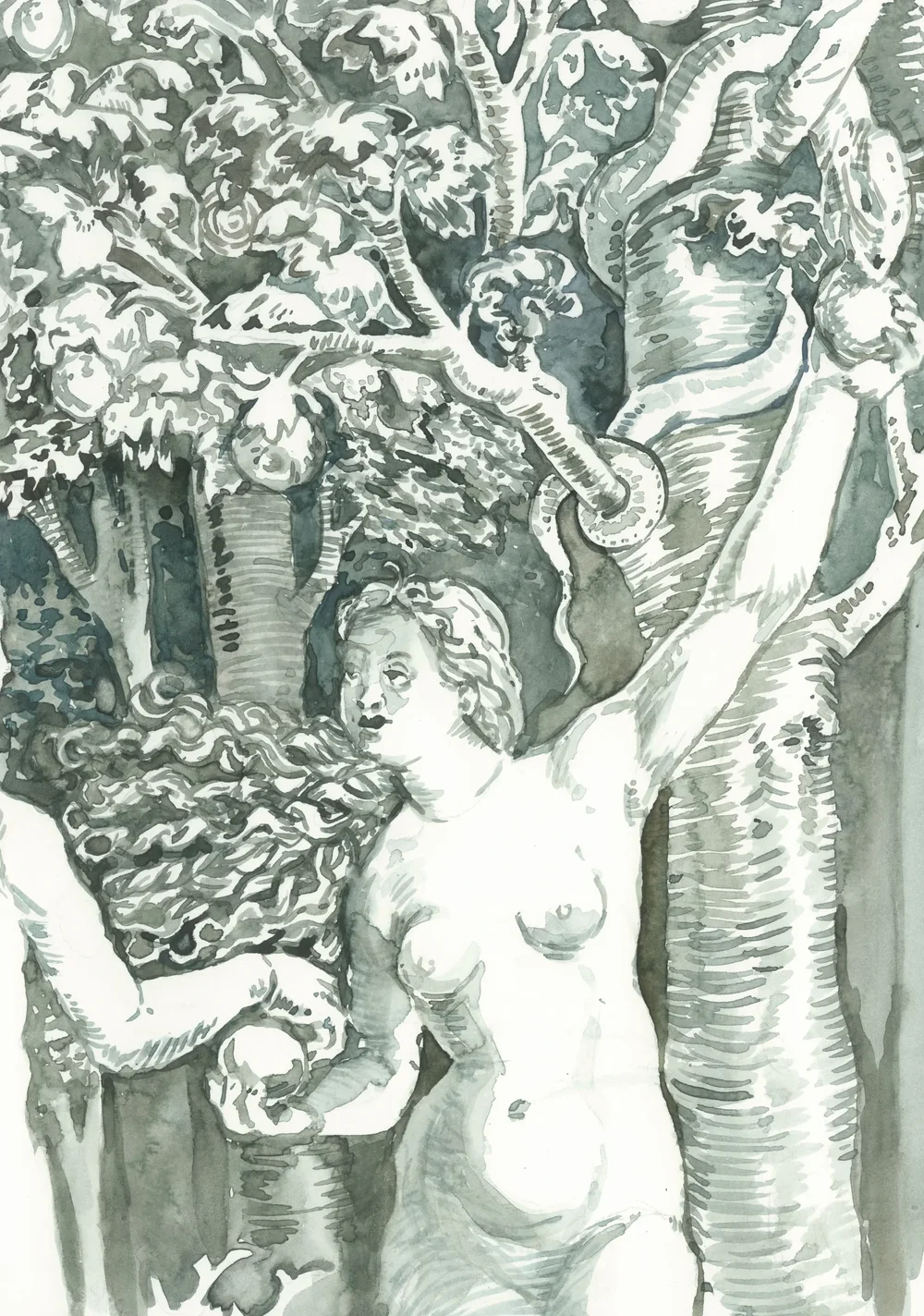
After Hans Brosamer
Adam et Eve 1500-1554
2025 Watercolour on Paper 21x29.7cm
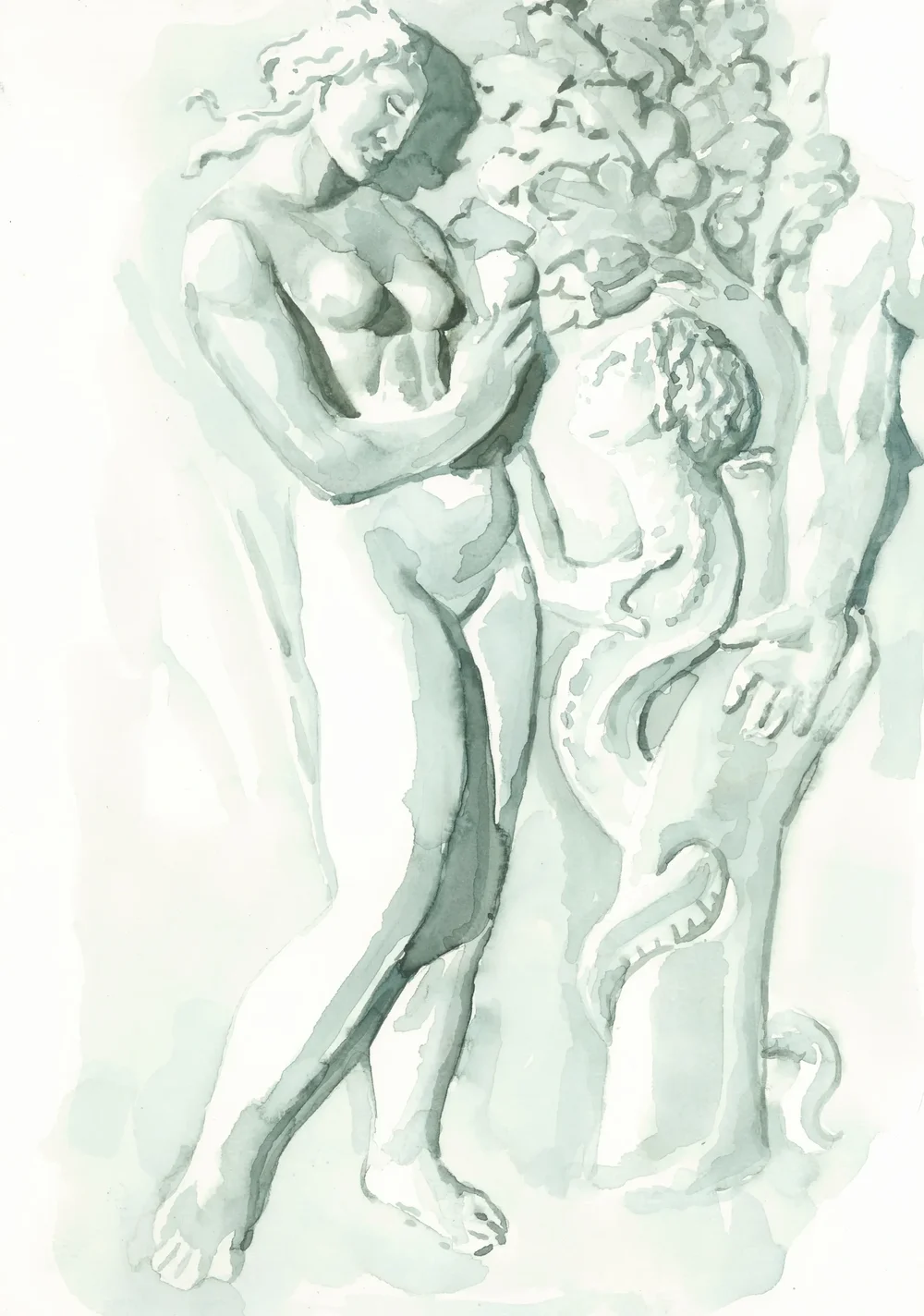
After Jacopo della Quercia
Original Sin 1425-1438
2025 Watercolour on Paper 21x29.7cm
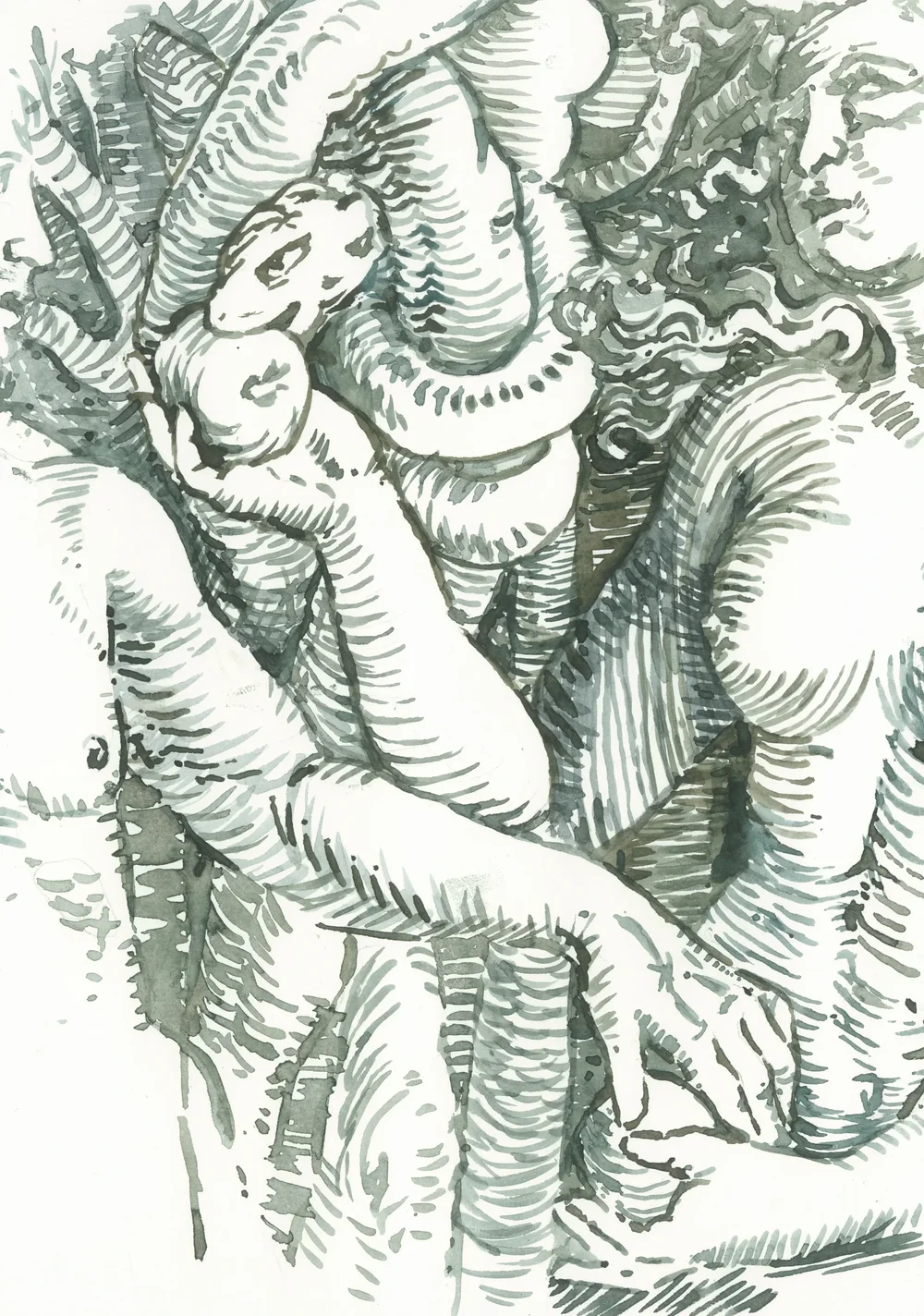
After Hans Sebald Beham
The Fall of Man 1525-1527
2025 Watercolour on Paper 21x29.7cm
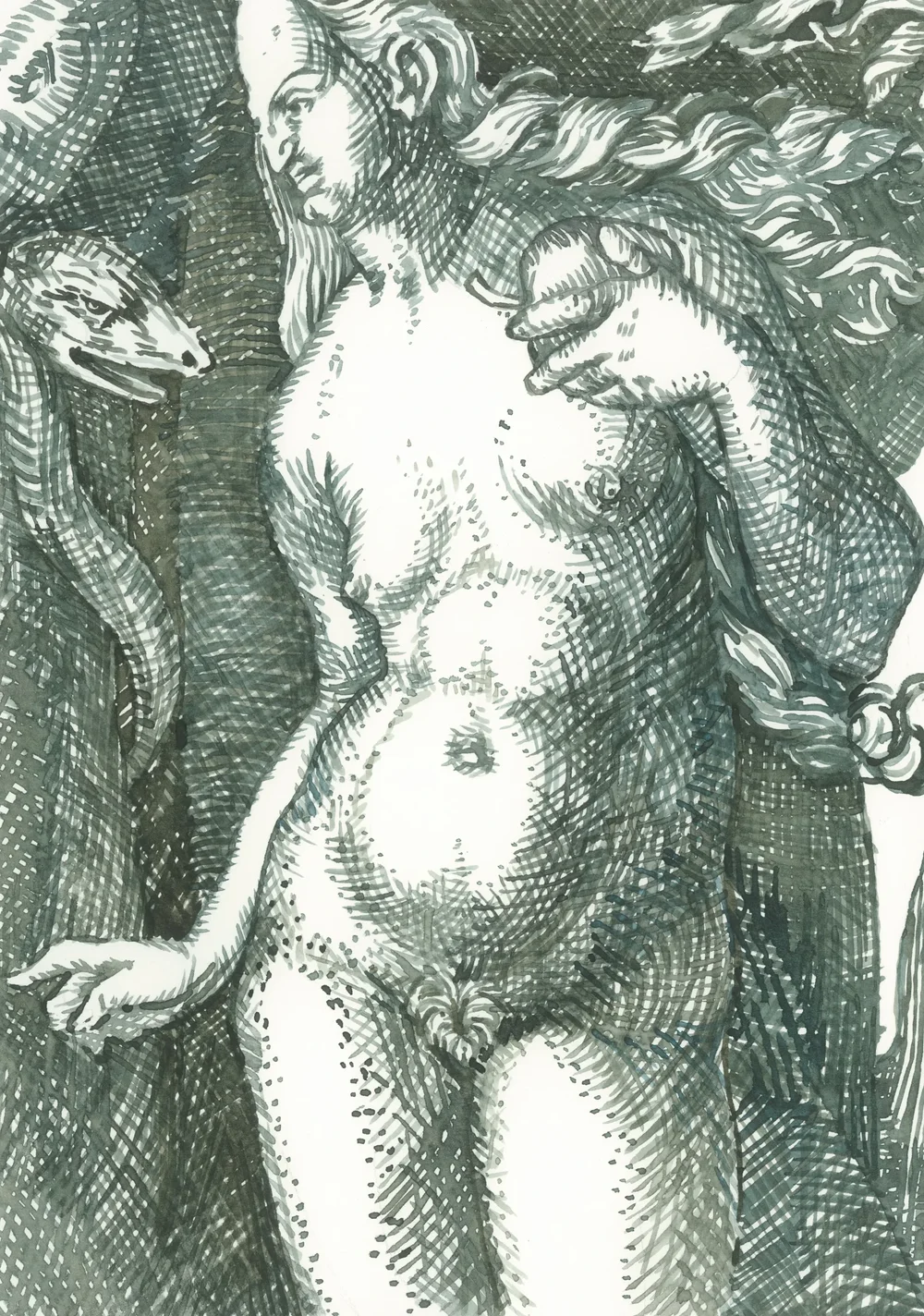
After Heinrich Aldegrever
Eve 1502-1561
2025 Watercolour on Paper 21x29.7cm
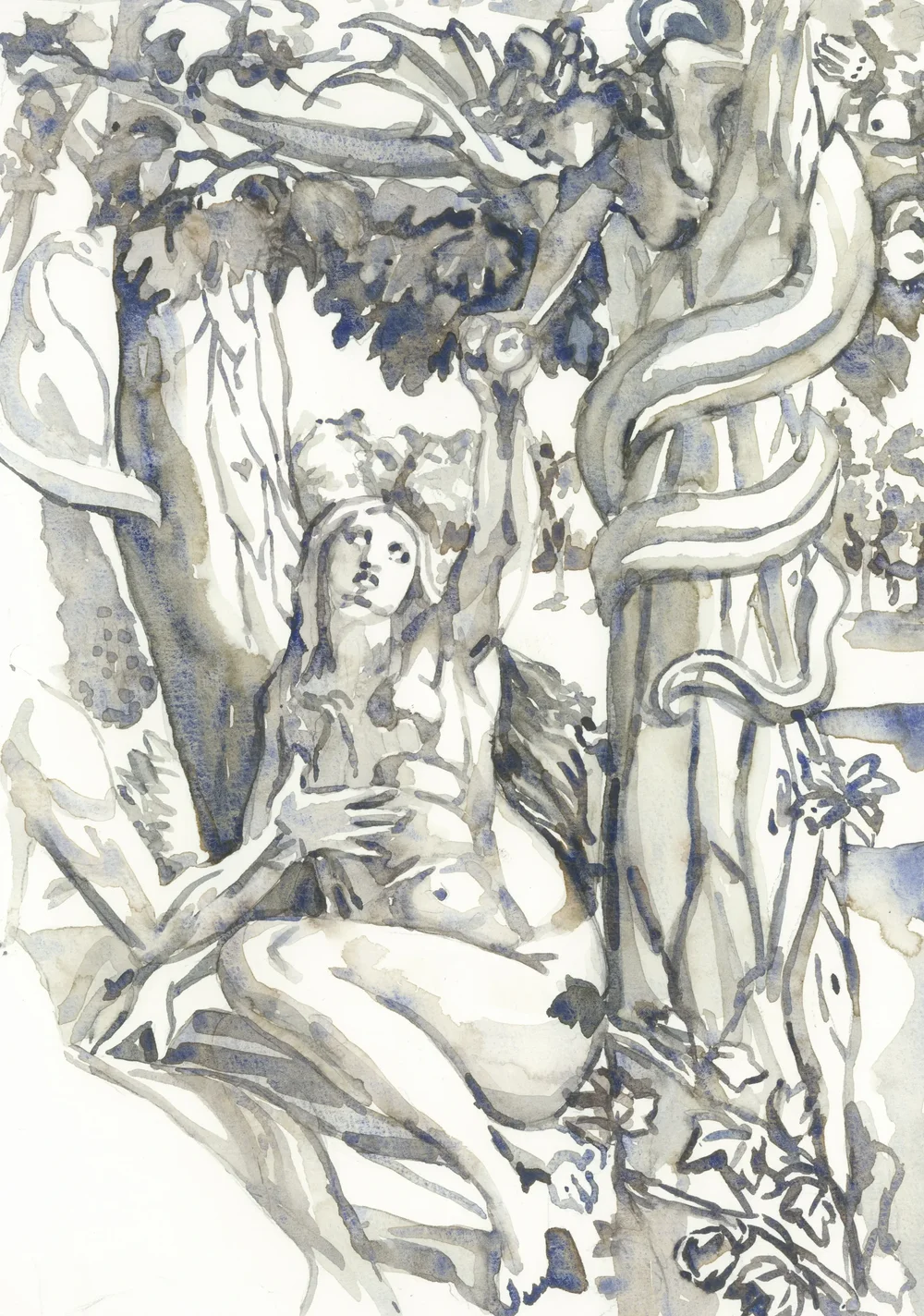
After Jean Mignon, after Luca Penni
Temptation in the Garden 1535-1555
2025 Watercolour on Paper 21x29.7cm
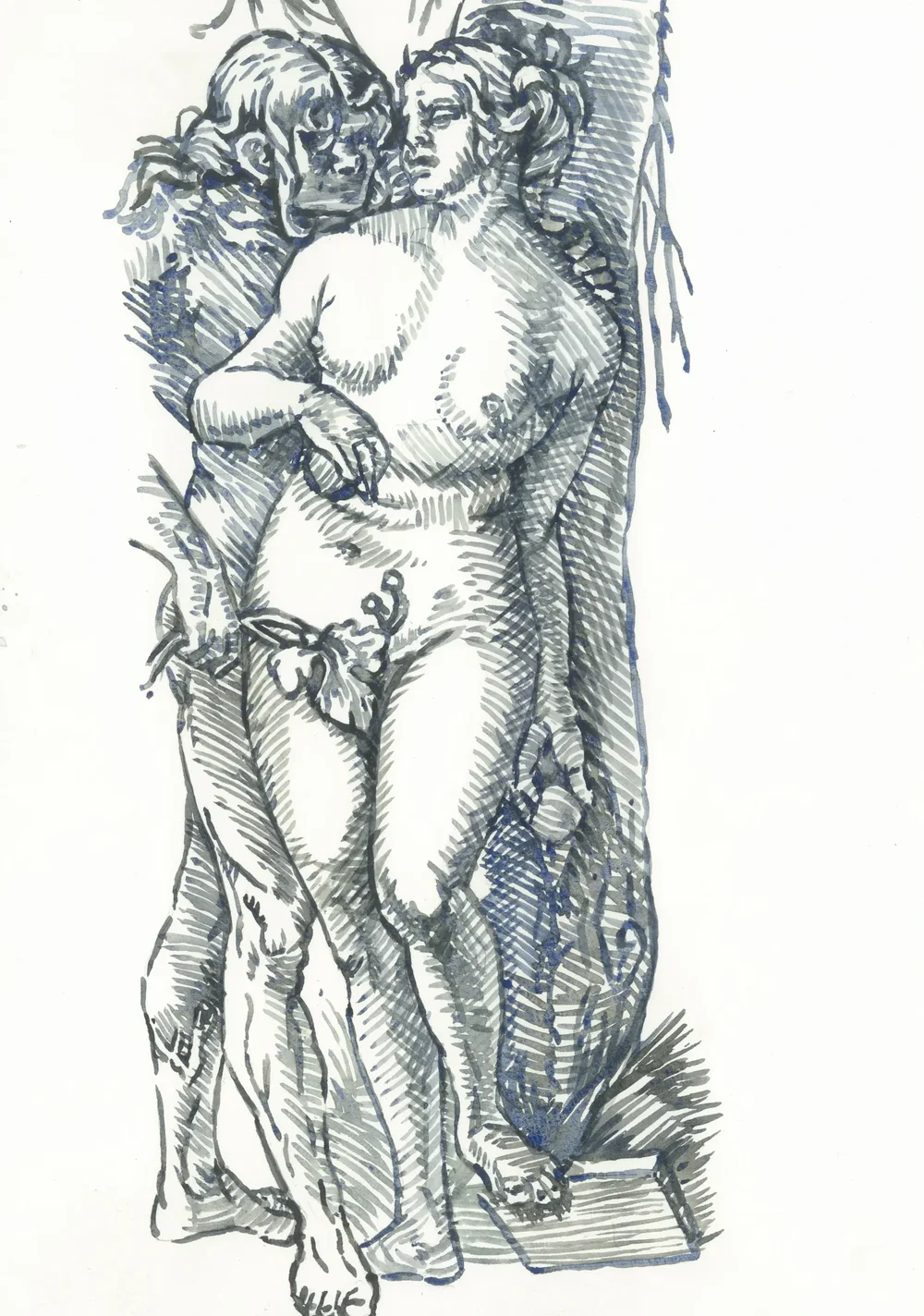
After Hans Baldung
Adam and Eve 1519
2025 Watercolour on Paper 21x29.7cm
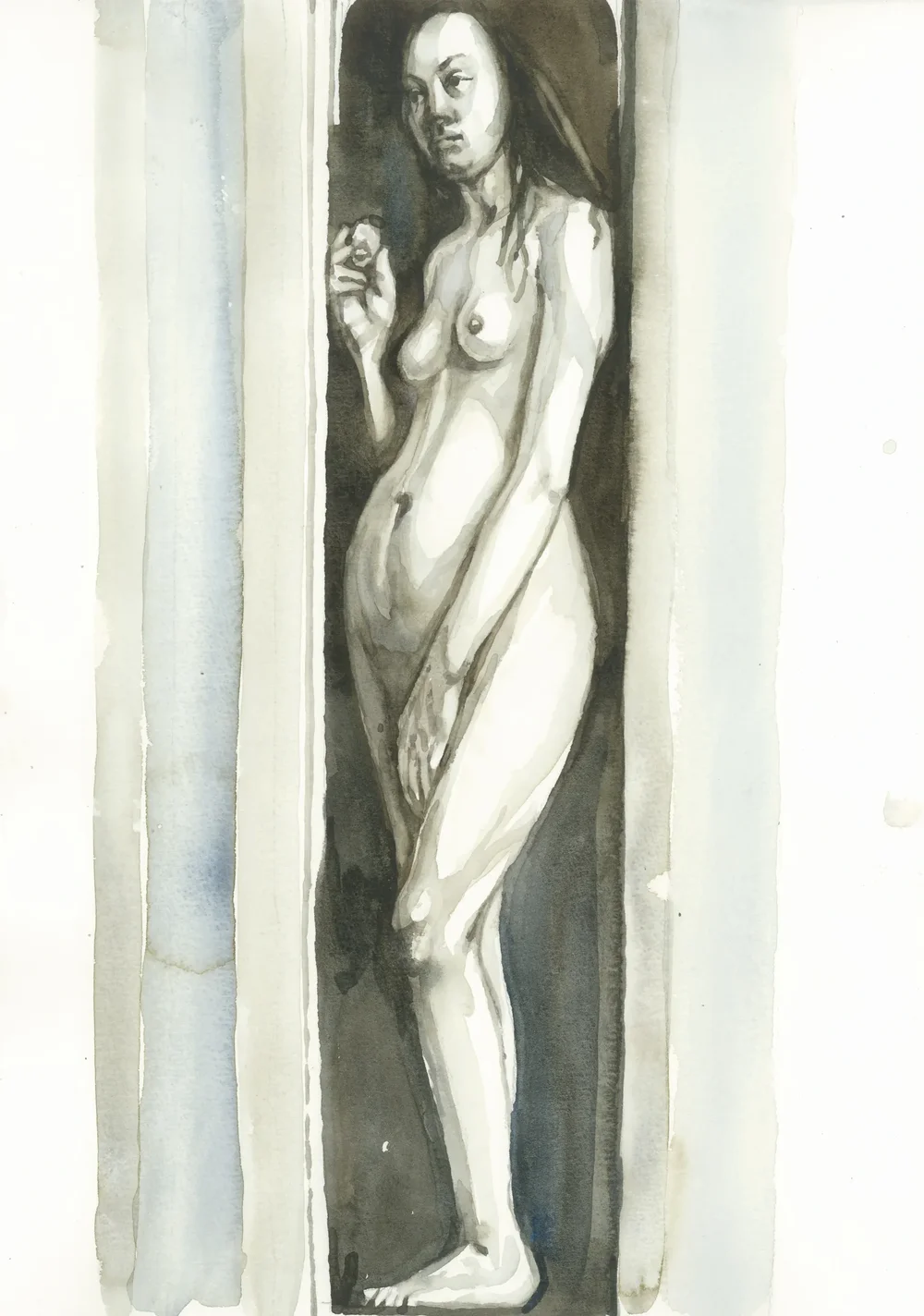
After Hubert and Jan van Eyck
Adam and Eve Detail from the Mystic Lamb 1432
2025 Watercolour on Paper 21x29.7cm
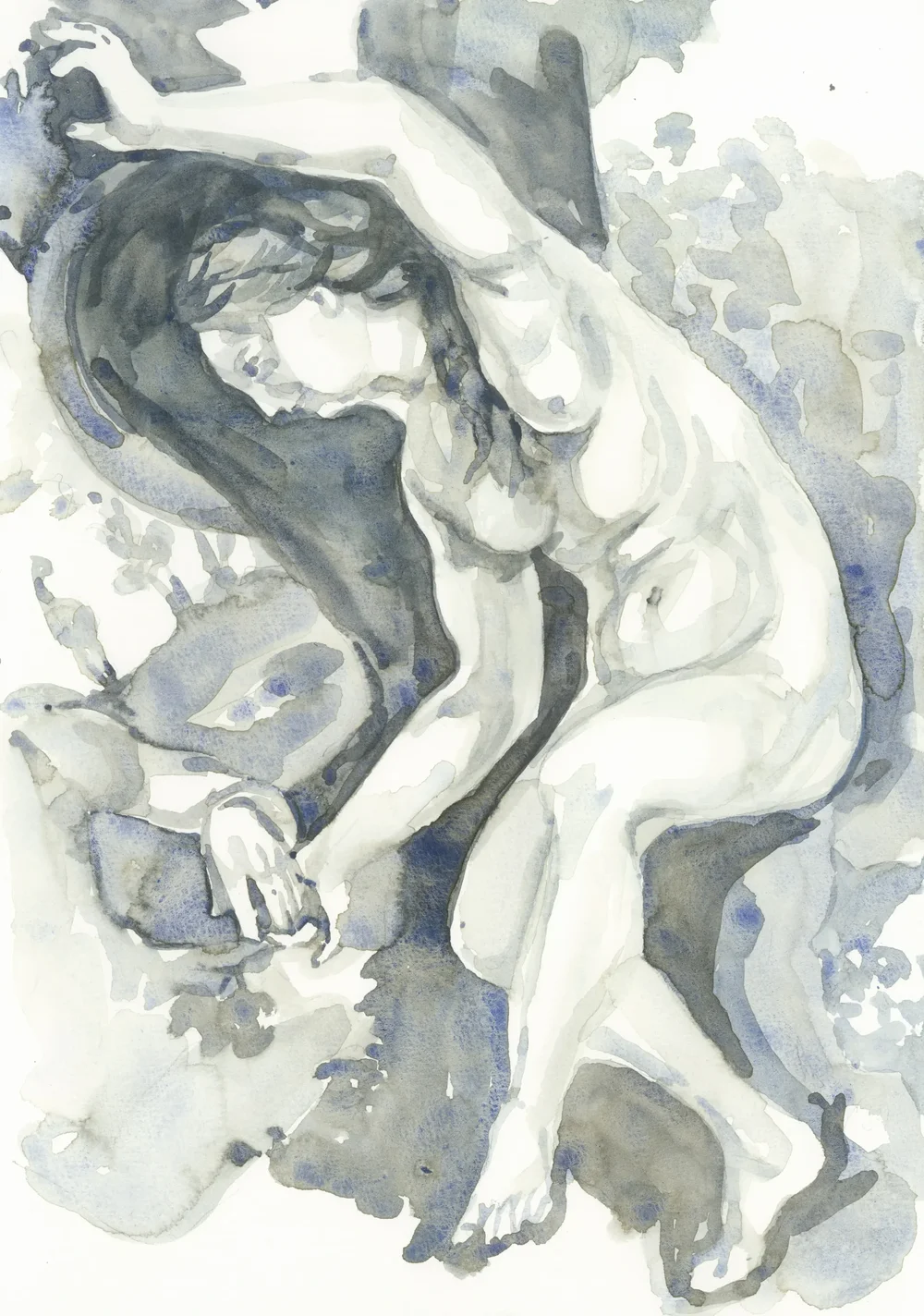
After Frans Floris
Adam Received the Forbidden Fruit 1519-1570
2025 Watercolour on Paper 21x29.7cm
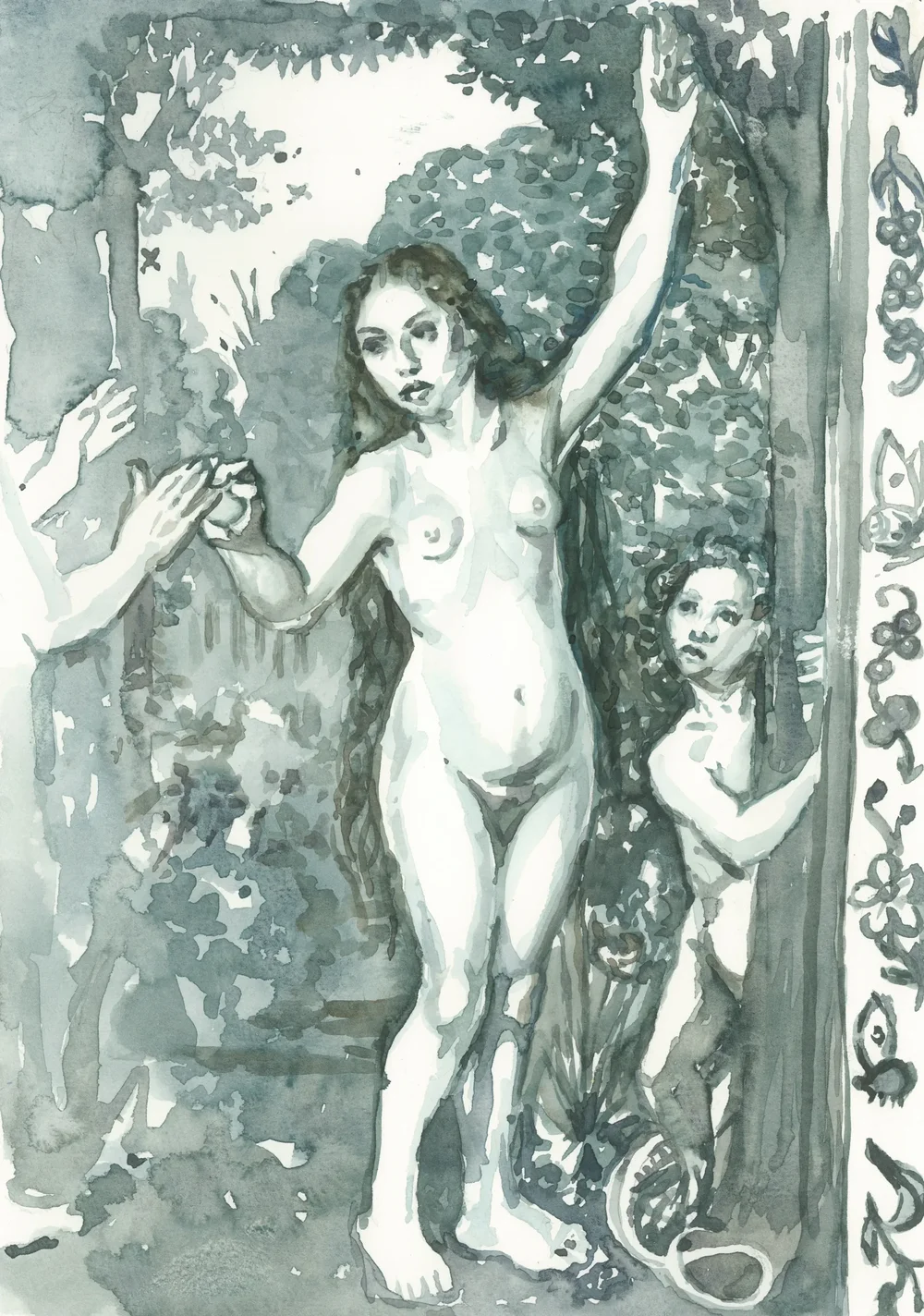
After School of Ghent and Bruges
Adam and Eve and the Salamander 1520
2025 Watercolour on Paper 21x29.7cm
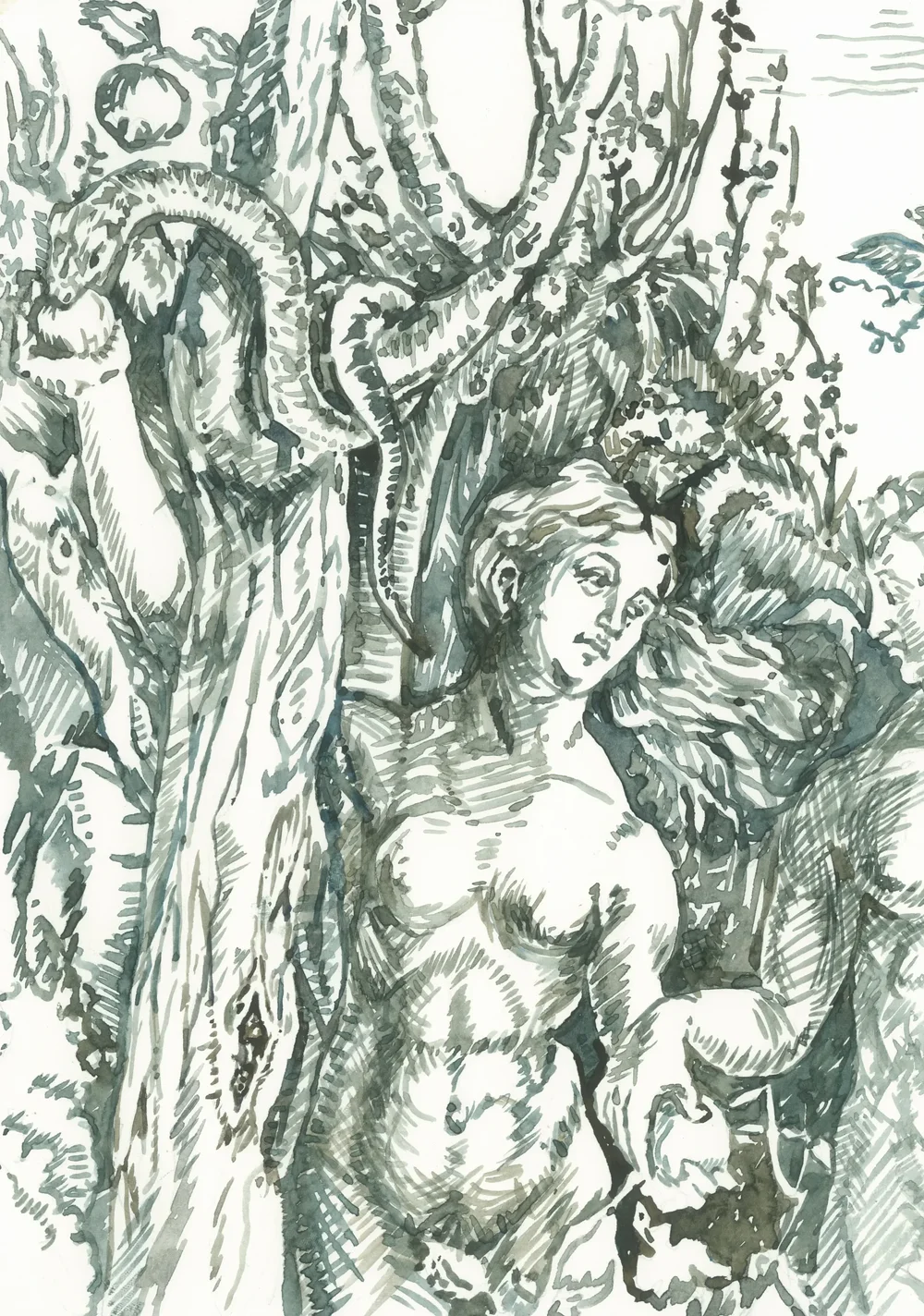
After Hans Springinklee
Adam et Eve 1495-1540
2025 Watercolour on Paper 21x29.7cm
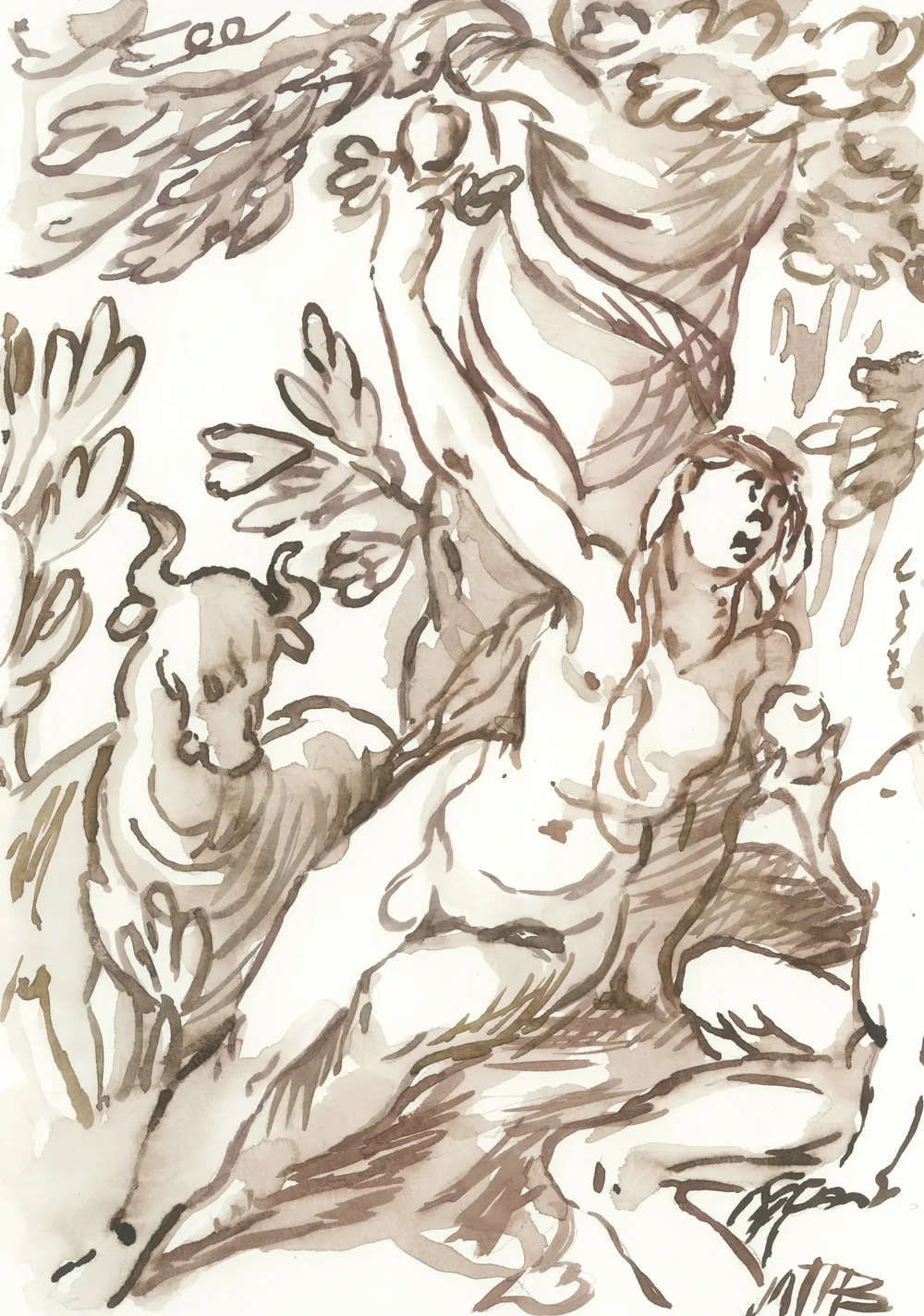
After H.E. Weyer
Fall with Animals 1610-1620
2025 Watercolour on Paper 21x29.7cm
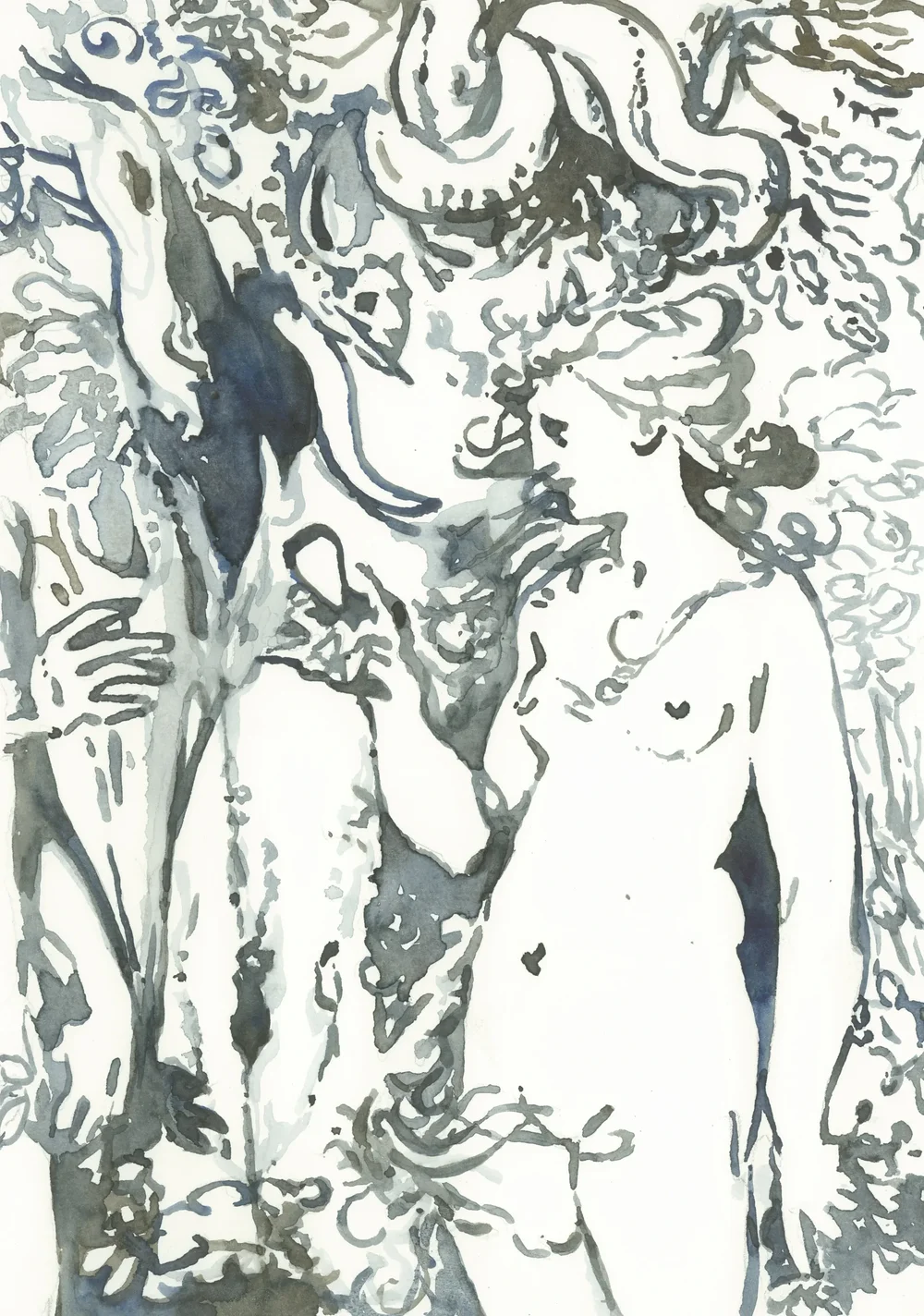
After Jacob Matham, after Hendrix Goltzius
Adam receiving the forbidden Fruit 1606
2025 Watercolour on Paper 21x29.7cm
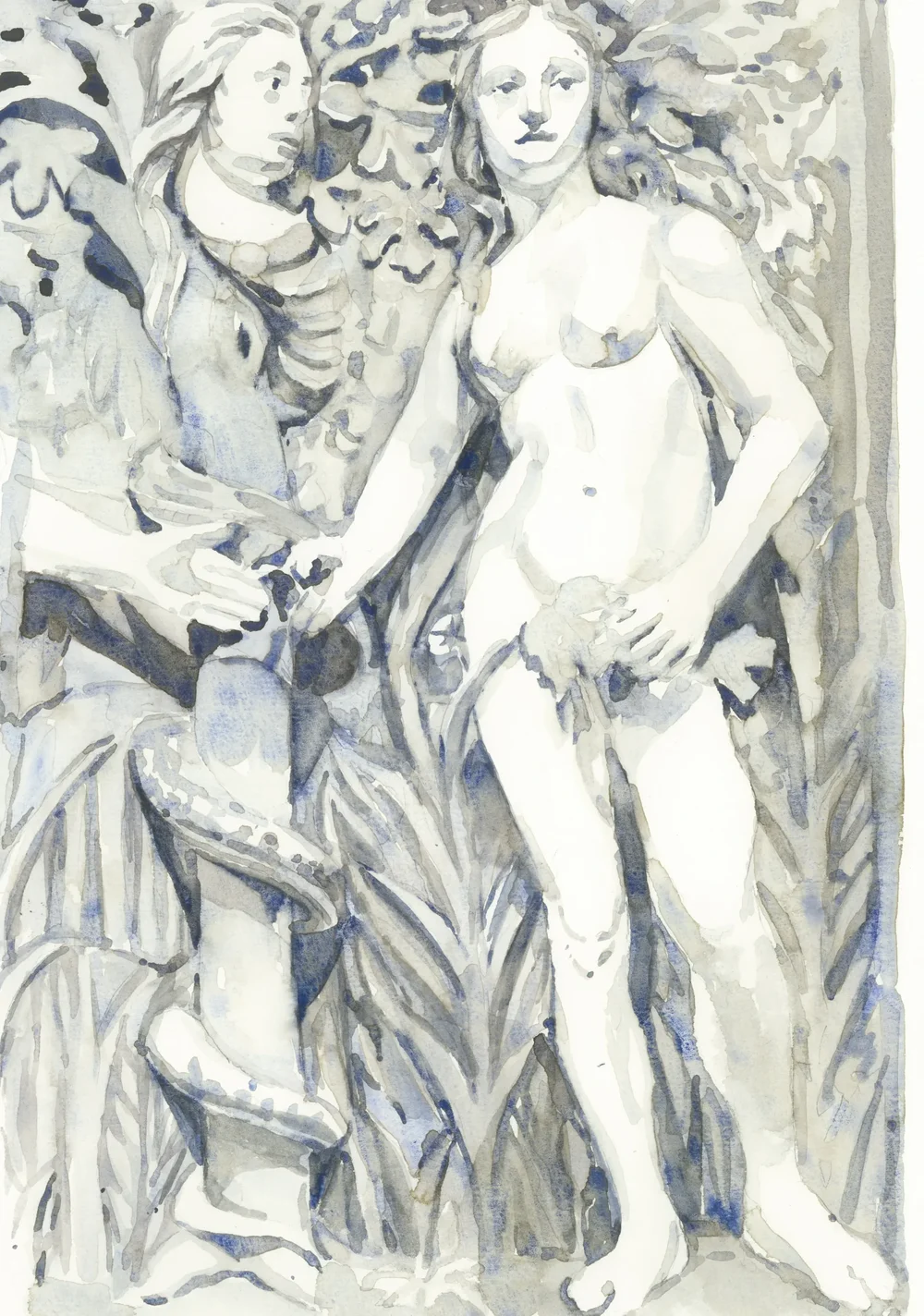
After Giovanni della Robbia
Adam and Eve 1515
2025 Watercolour on Paper 21x29.7cm
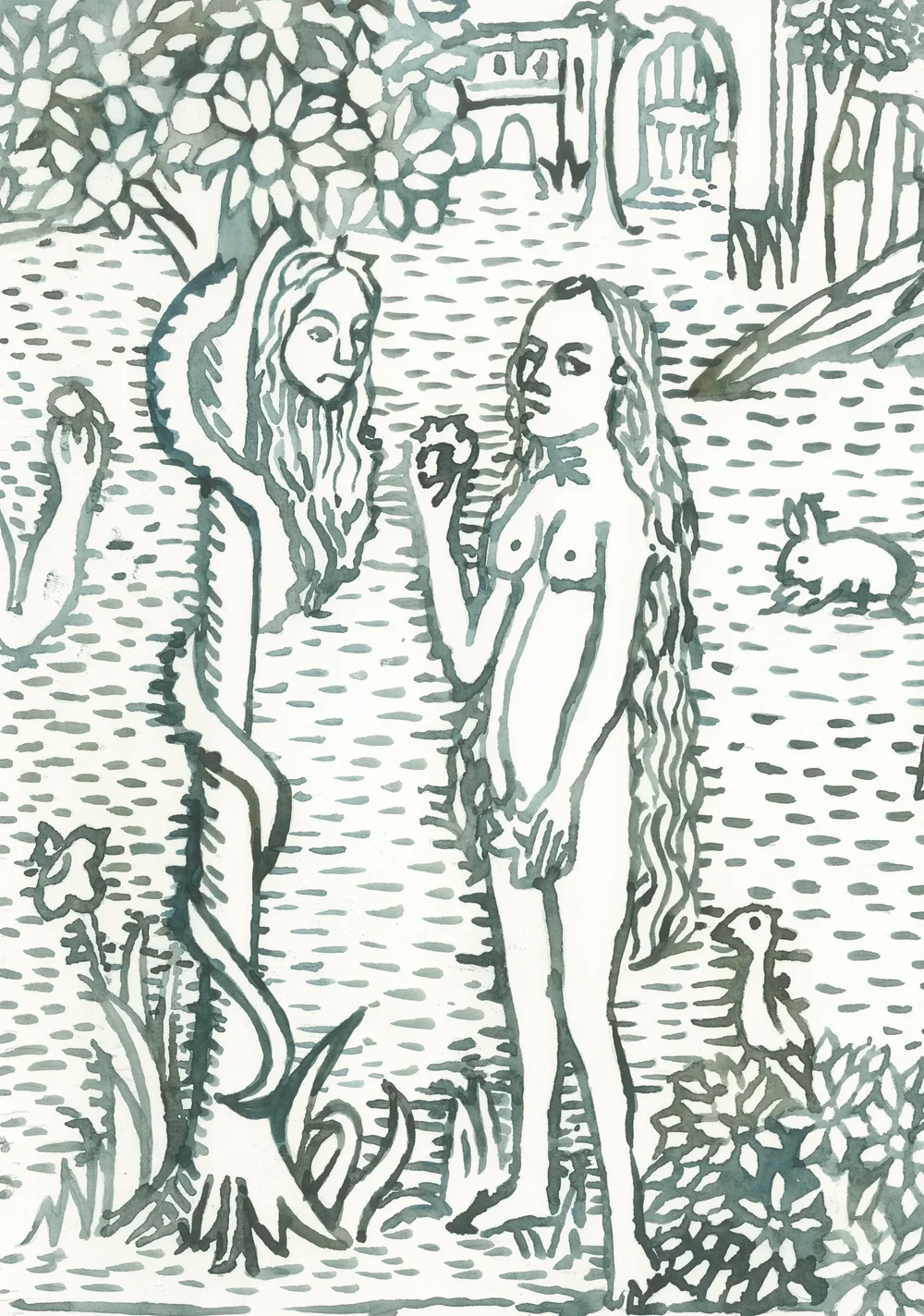
After Bartholomäus von Unkel
Der Sündenfall und die Vertreibung aus dem Paradies 1479
2025 Watercolour on Paper 21x29.7cm
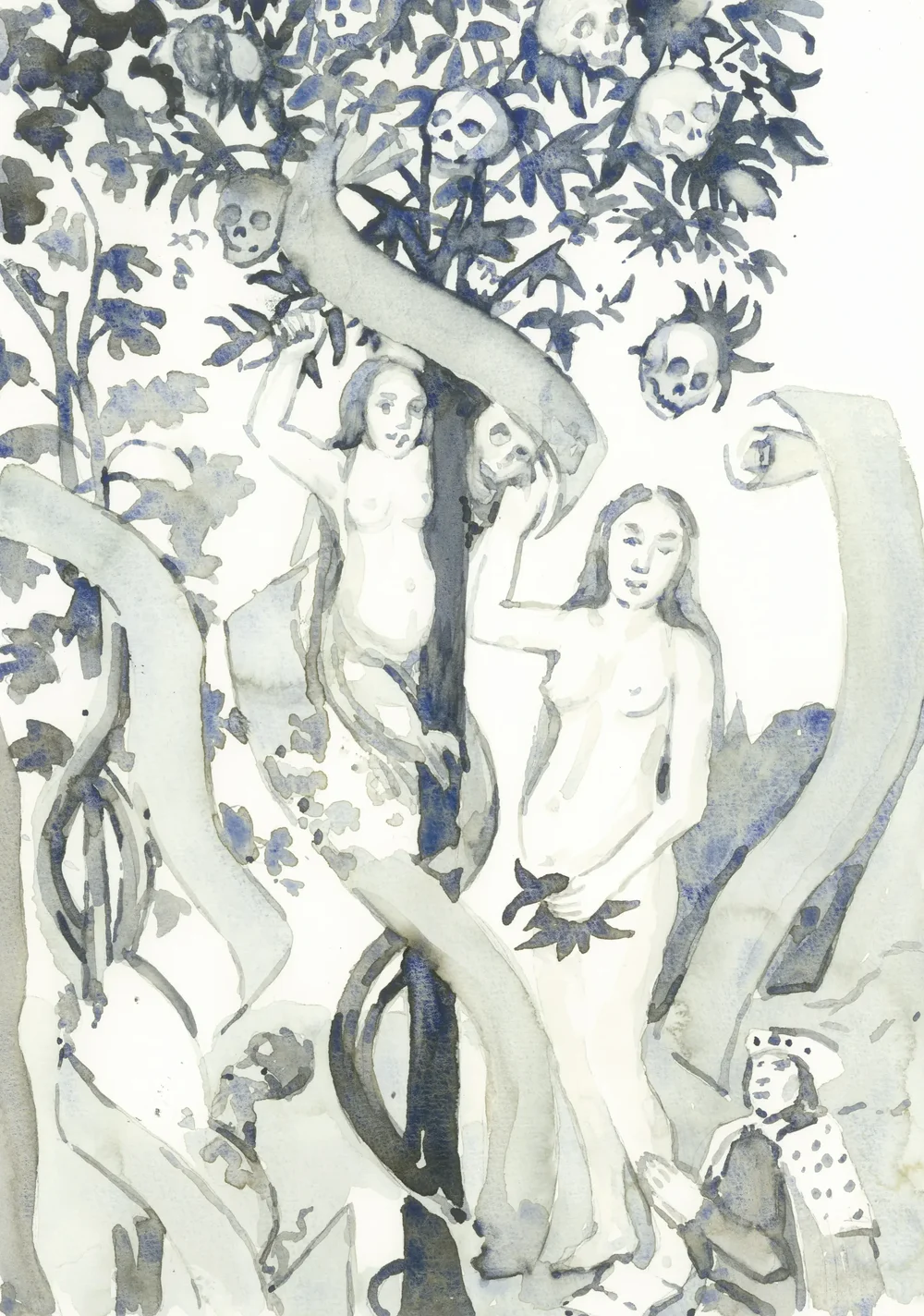
After Burgundian Workshop
1513-1515
2025 Watercolour on Paper 21x29.7cm
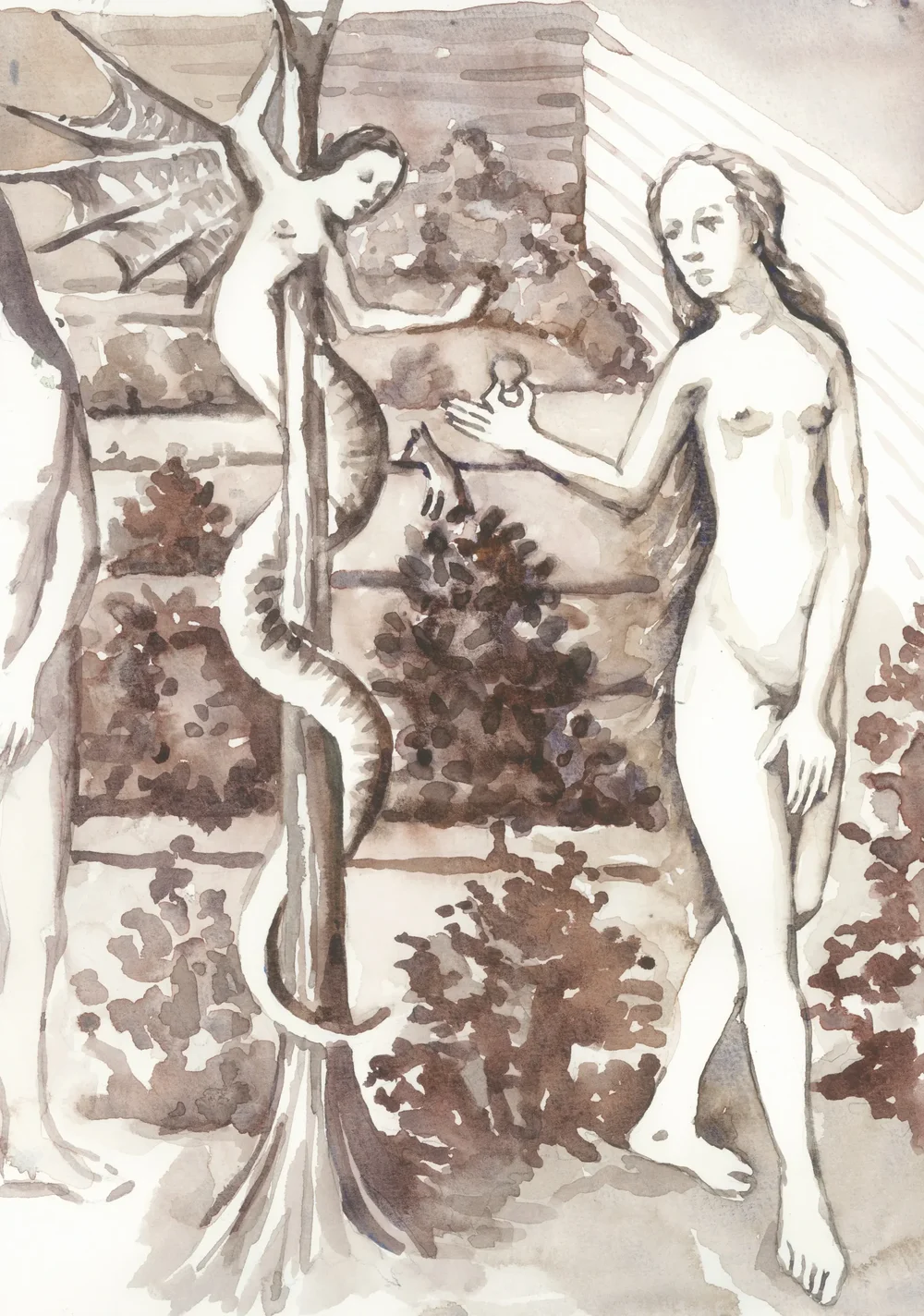
After Netherlandish block book page
15th century
2025 Watercolour on Paper 21x29.7cm
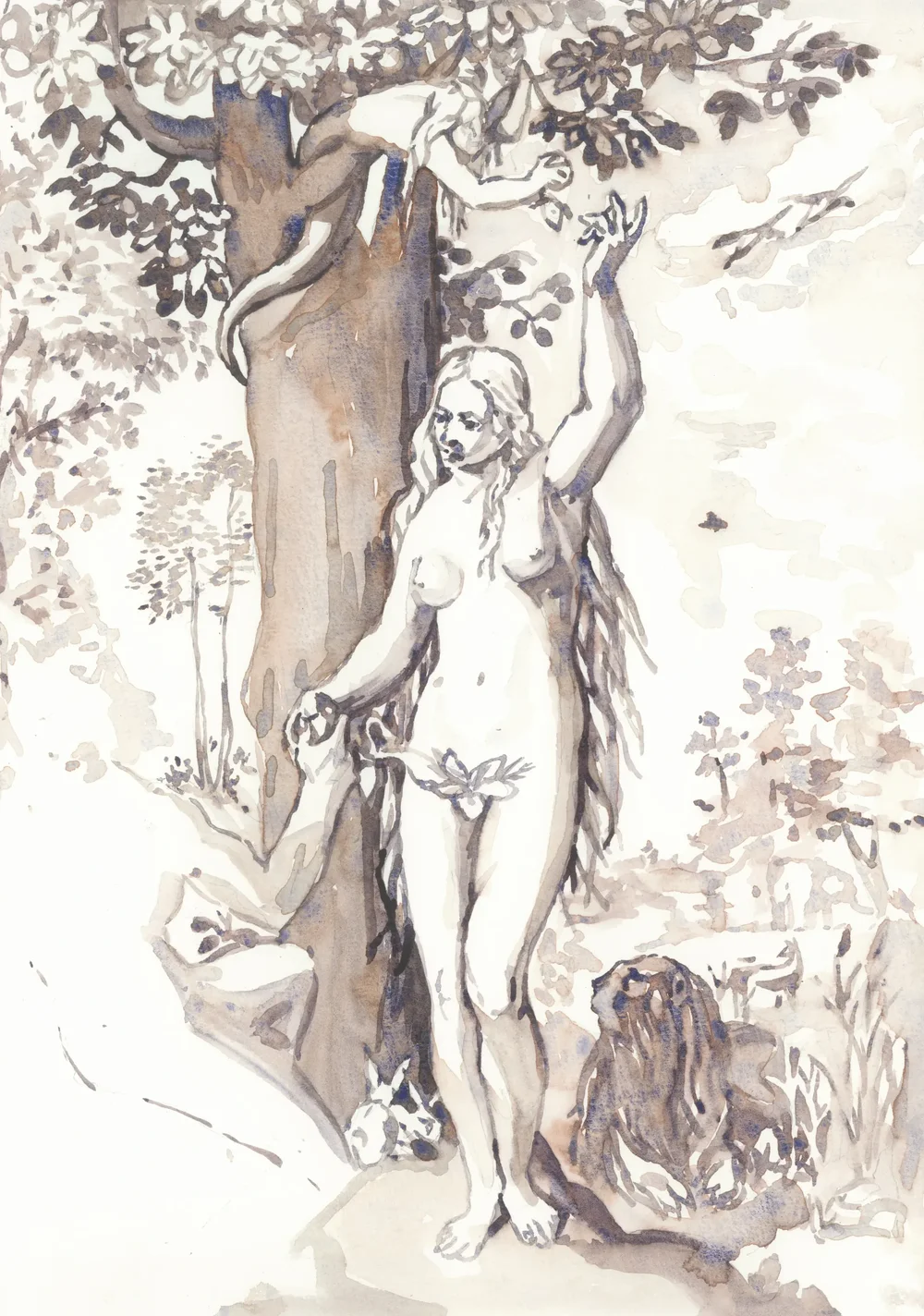
After Annibale Carracci
Adam and Eve 1581
2025 Watercolour on Paper 21x29.7cm
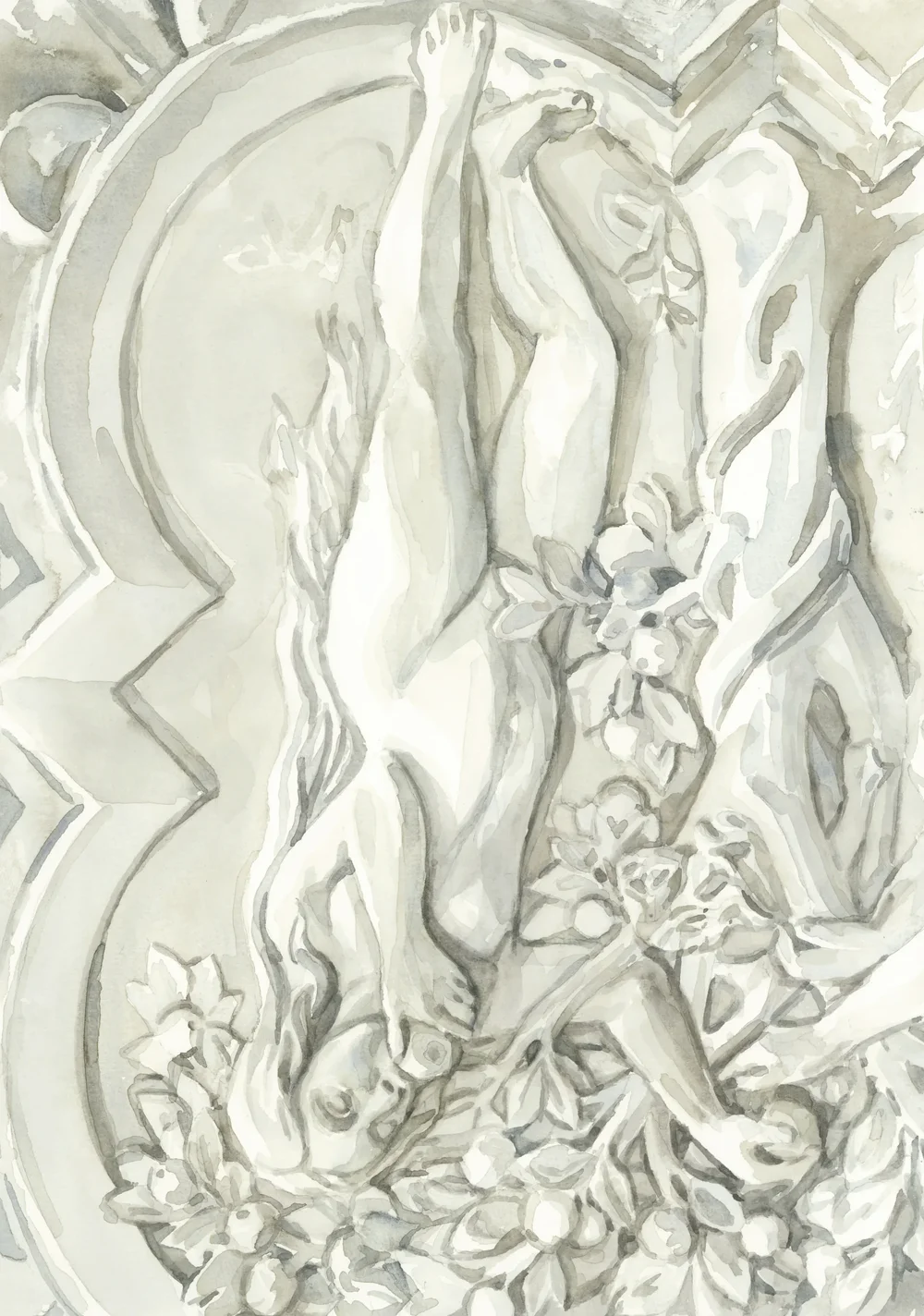
After Restored 13th century relief
Adam and Eve at the Tree of Knowledge
2025 Watercolour on Paper 21x29.7cm
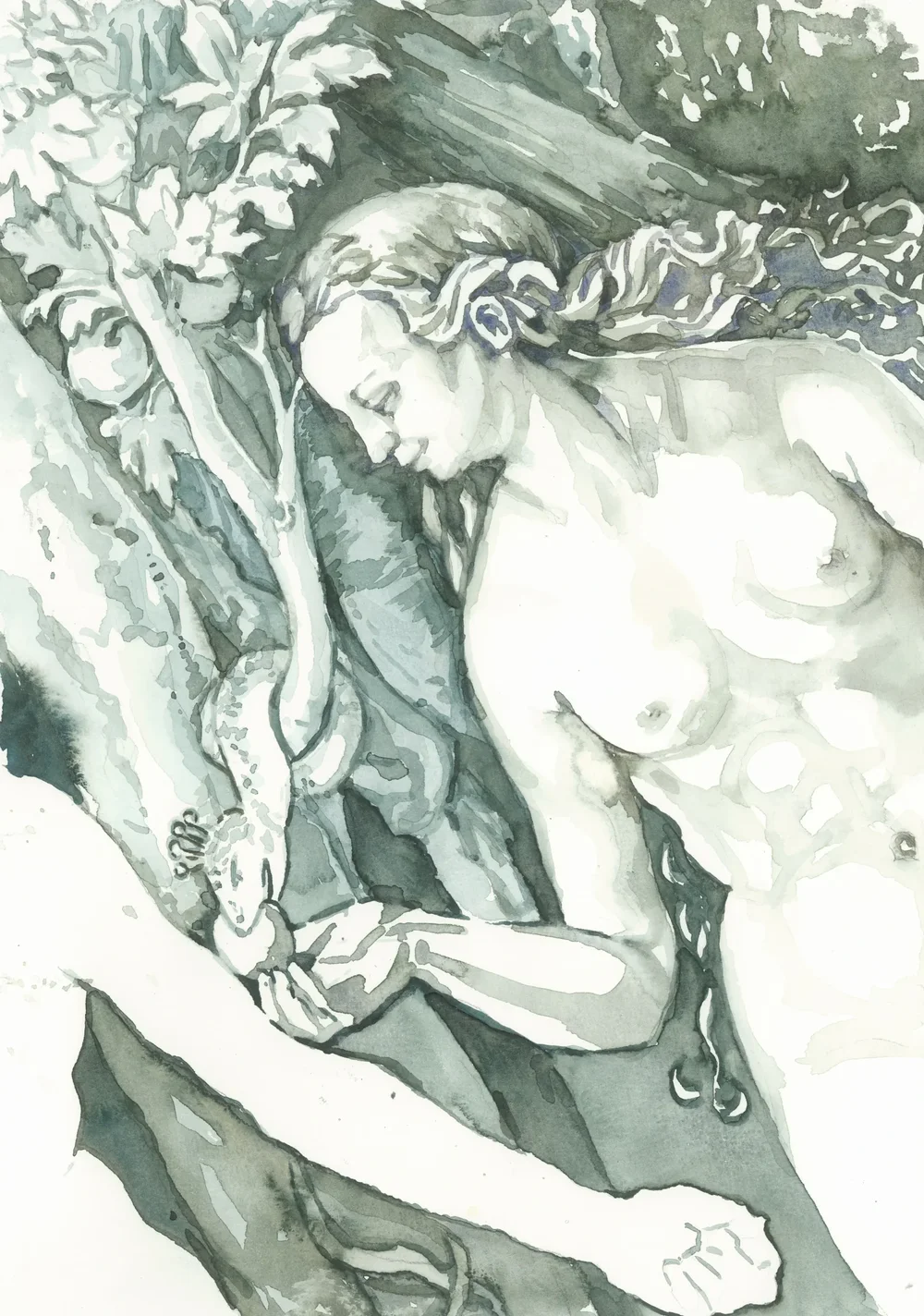
After Albrecht Dürer
Adam and Eve 1504
2025 Watercolour on Paper 21x29.7cm
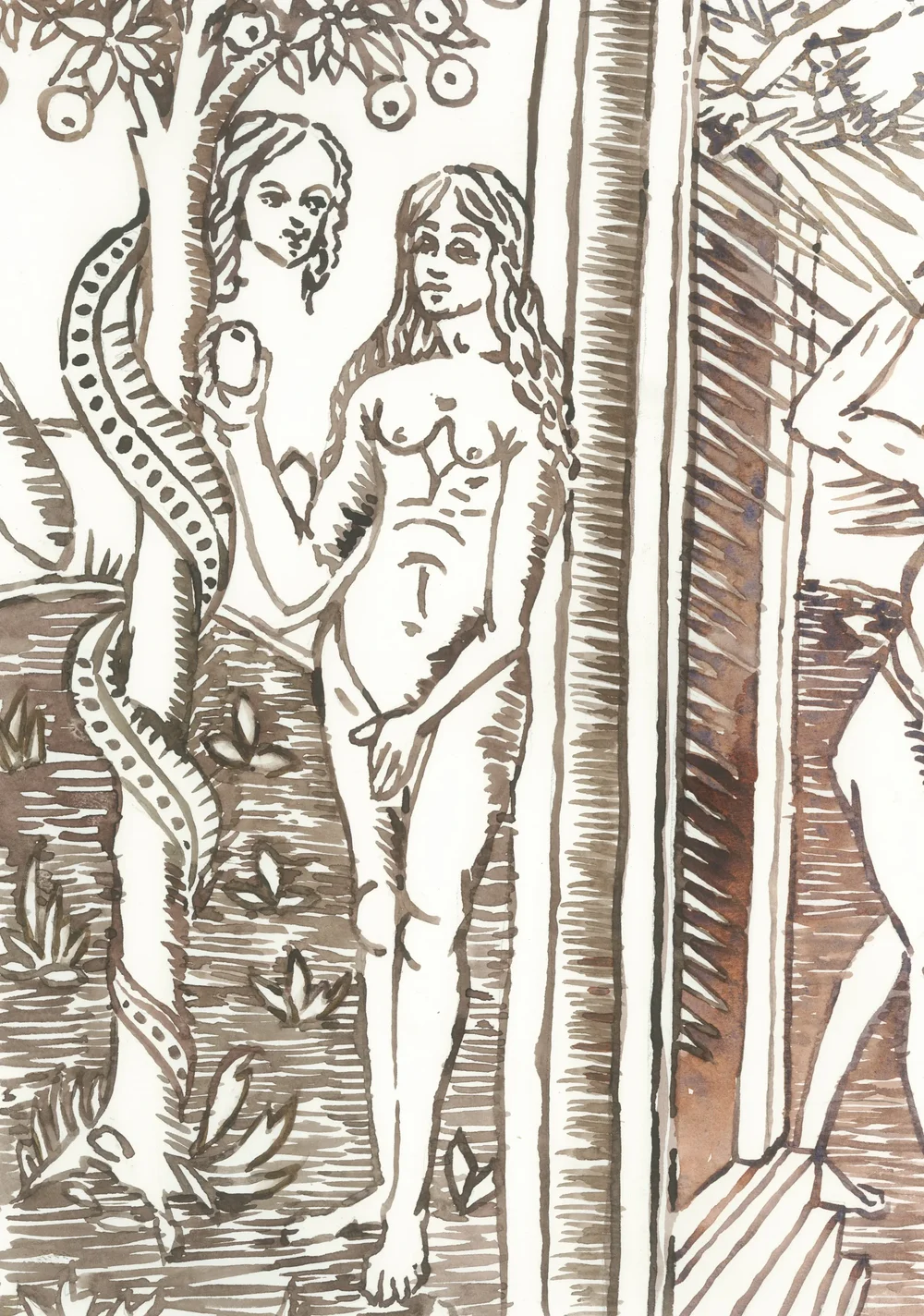
After Jacopo Filippo Foresti
Woodcut 1503
2025 Watercolour on Paper 21x29.7cm
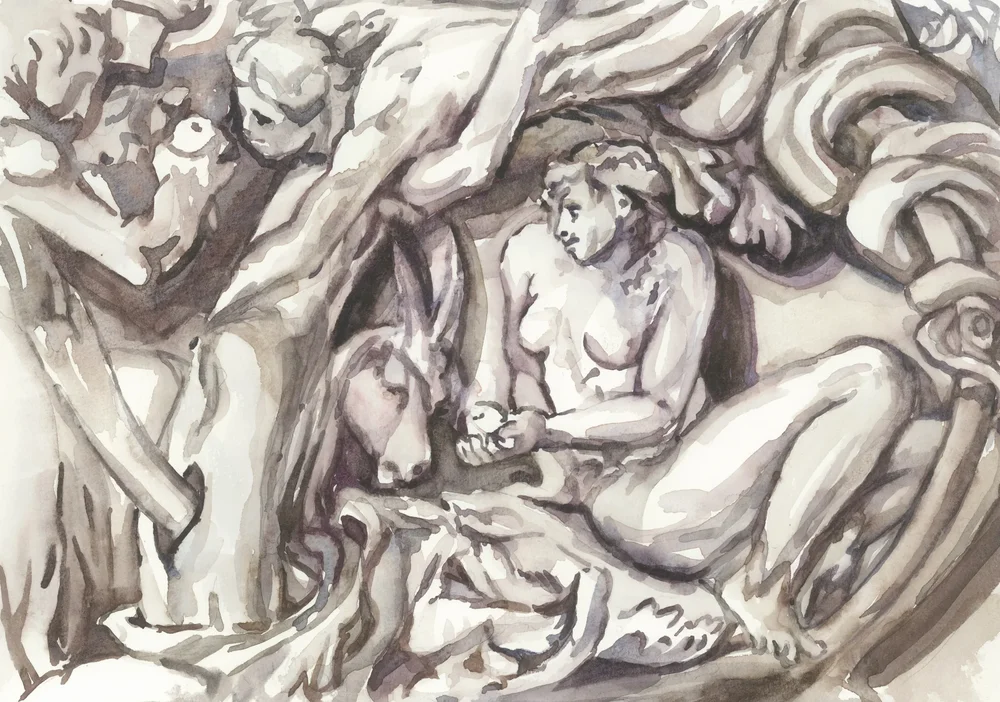
After Sketch for a Frieze
With the Fall of Man
2025 Watercolour on Paper 29.7x21cm
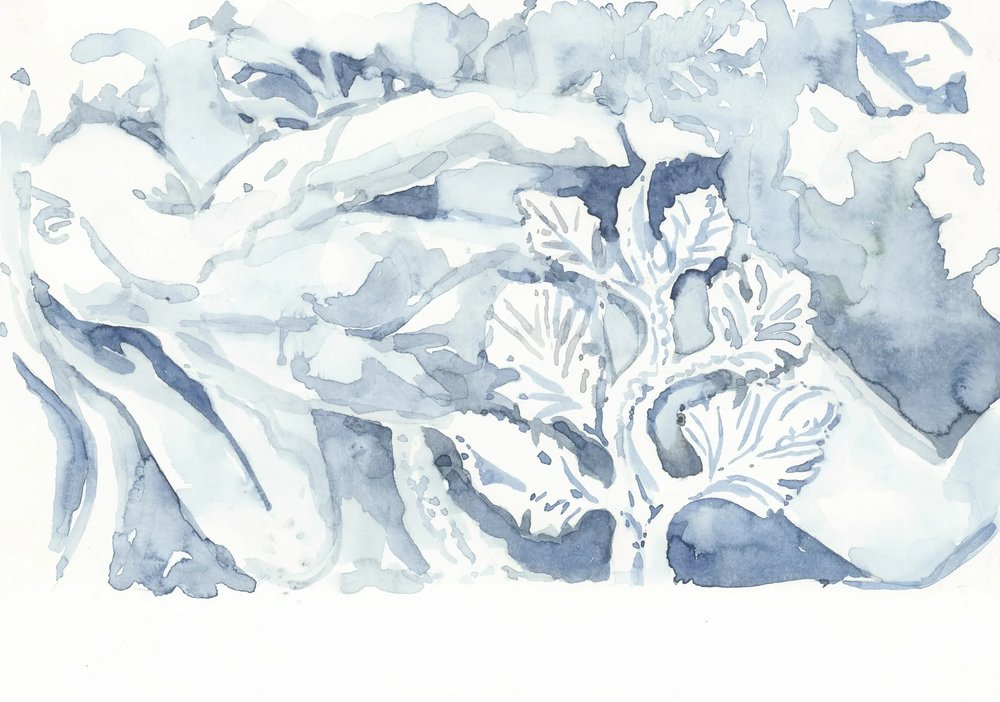
After Gislebertus
Eve 1130
2025 Watercolour on Paper 29.7x21cm
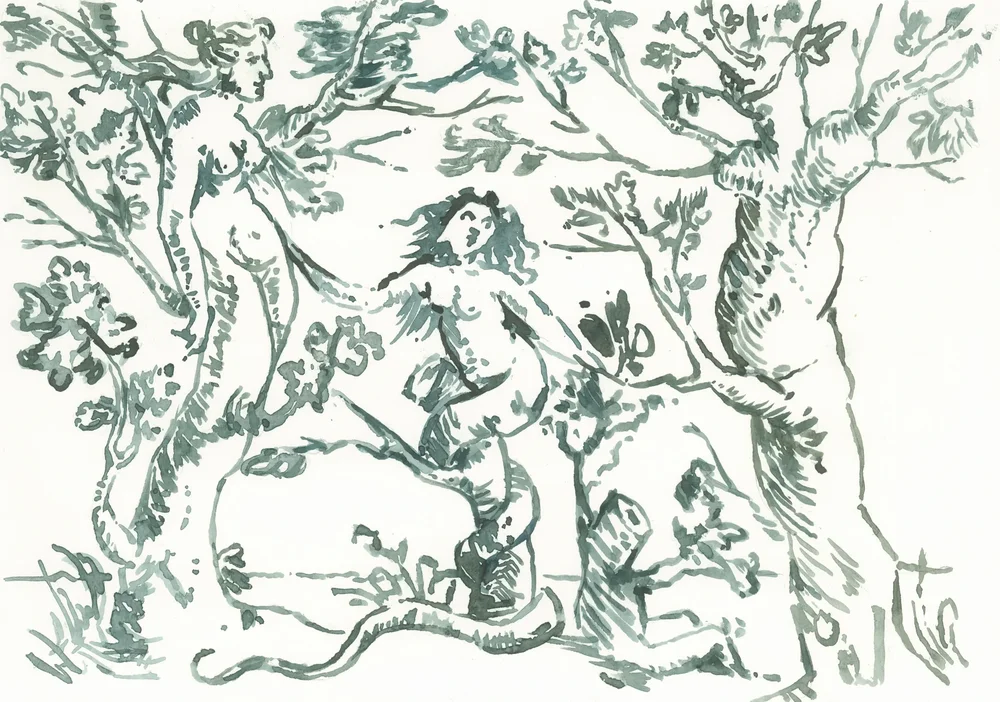
After Giovanni Battista Braccelli
Bizzarie di varie figure 1624-1649
2025 Watercolour on Paper 29.7x21cm
After Michelangelo
The Temptation of Adam and Eve 1508-1512
Coil and Roar
Lauren Carroll Harris
“The process is one of feminist metabolising: directly copying rather than reinterpreting or augmenting...What Clare found was not images representing a transgression, but images that are wholly and surprisingly sexual and transgressive in and of themselves.”
You are being hysterical
If I were to give hysteria a human face, it would be male. But that’s not what the ancients thought. Cultures as wide as the Romano-British and Middle Byzantium made magical amulets bearing a womb as a stylised woman’s face radiating with snakes. Wrought of gold, bronze, silver, lead or copper, they were worn across all social classes. Scholars generally theorise that a protective totem, sometimes accompanied by spells, was needed to ensure a woman’s womb wouldn’t blacken, turn rogue and wander around the body. Some spin-offs on the genre warded against miscarriage or dealt with various problems to do with bleeding, childbirth and other ailments like migraine, fever and difficulty breathing thought to be caused by a demonic, roaming womb – an animal within an animal. Some pendants bear the inscription, “Lord, help the wearer,” while others bore a lock on the womb. The title of this exhibition is drawn from the womb poems often carved into these amulets: “womb black, blackening, as the snake you coil and as a lion you roar” – mantras to smother, subdue and sedate female rage and rebellion.
We no longer honour such magical traditions in present-day Western culture, but images of wombs in token form stored up problems for the future. I’ve seen the ‘you’re hysterical’ look, shot at me from doctors, teachers, journalists, and so I find it hard to think of these amulets as purely historical or past phenomena. They speak to something true of the experience of gender today. “Because of pregnancy and childbirth, women’s health was always precarious and their life expectancy was short until last century,” says one history website contextualising the womb amulets. Today, the World Health Organisation still deplores the exclusion of women – including those who are pregnant, breastfeeding and postmenopausal – in clinical trials, as such exclusive trial designs lead to huge distortions in data, knowledge, research, policy and medical innovation.
Derived from the time of Hippocrates and once considered a physical ailment, the concept of hysterical neurosis moved from neurology to psychiatry in the 19th century, and was deleted from the passages of the Diagnostic and Statistical Manual of Mental Disorders as late as 1980.
The history of medicine abounds with these biases. In the nineteenth century, a new disorder was variously called green sickness, chlorosis or the disease of the virgins. Young unmarried girls were stricken with loss of breath and faintness. It was thought that their trapped menstrual blood was poisoning them. The cure was marriage. Endometriosis, migraines and epilepsy were also once considered hysterical diseases, while morning sickness and labour pain were supposedly indicators of ambivalent motherhood. We now know better, goes the modern incantation. Perhaps some people find it embarrassing and dull that we are still talking about women and freedom.
Wandering wombs are a bit like tap-shoes or some other cultural relic that can’t be reclaimed with nostalgia. I can’t exactly see uterine amulets becoming tattoos in the vein of Celtic armbands or evil eyes or a print on a Gorman bomber jacket. But, in dialogue with feminist history, contemporary artists are referencing the idea of the wandering womb and its feral snakes as a way to speak back to the tradition of hysteria, and retelling the representation of women in the process.
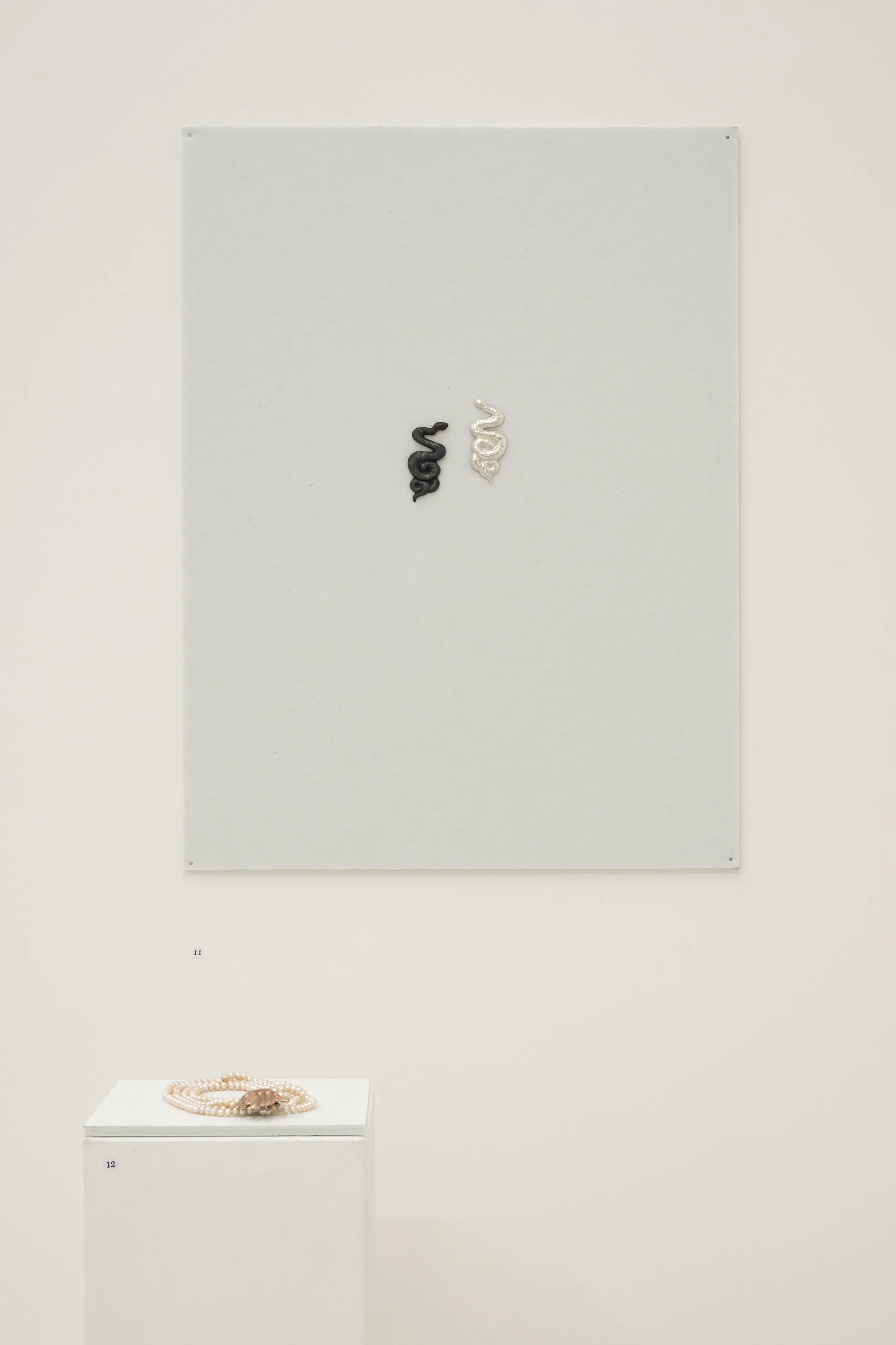
It’s said that Victorian-era physicians prescribed masturbation, then called an ‘hysterical paroxysm’, for hysteria – a theory that has gained popularity in books, popular culture and films in the past quarter of a century. Modeled from the line drawings from women’s sex guidebooks, elegantly masturbating hands recur as a cheeky motif in Emily O’Brien’s tender jewellery works in Coil and Roar. Disembodied like emoji, the quietly subversive hands stud bracelets and strands of pearls, a gem that is also one of the oldest forms of jewelry. Ancient, ecological and formed by the secretions of molluscs, pearls draw on a deep ocean of cultural references: their shine has lit up the pregnancy portraits of early modern queens, the luxury advertisements of contemporary jewelry companies, the Bible and The Odyssey. Here, they stand as a feminine archetype with a sexual connotation, also punctuating the perimeter of a mask that seems to conjure ideas of the unconscious, concealment and revelation. Sometimes, a sun-shimmered and rose gold brushed copper makes for a fleshy substitute for a skin tone; other times, pearled masks force the concealment of desire and expression. In Emily’s other works here, serpents – mythological, fearful – unwind across chains in a self-conscious meditation on the lasting power of old cultural stories of women’s shame.
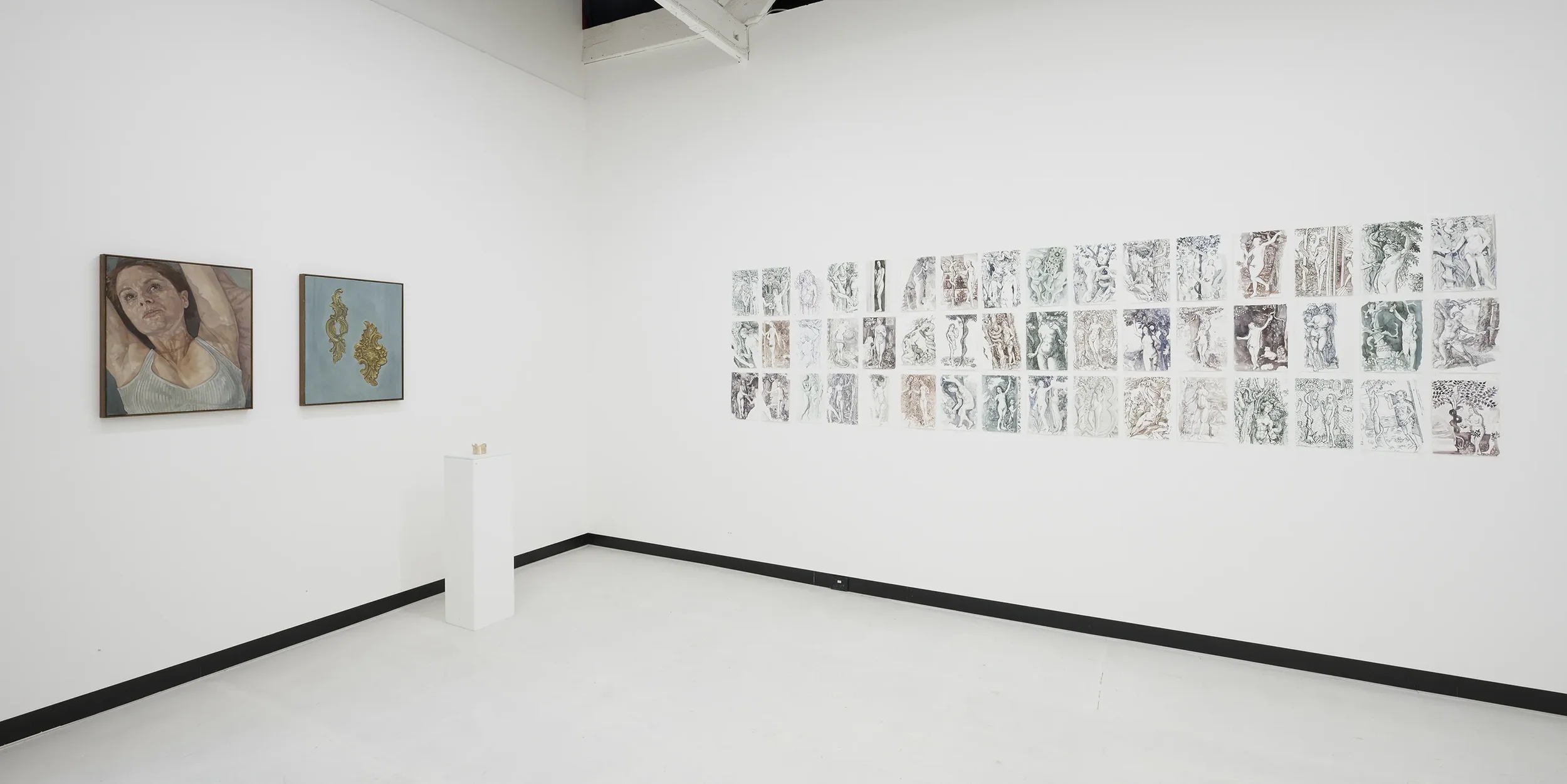
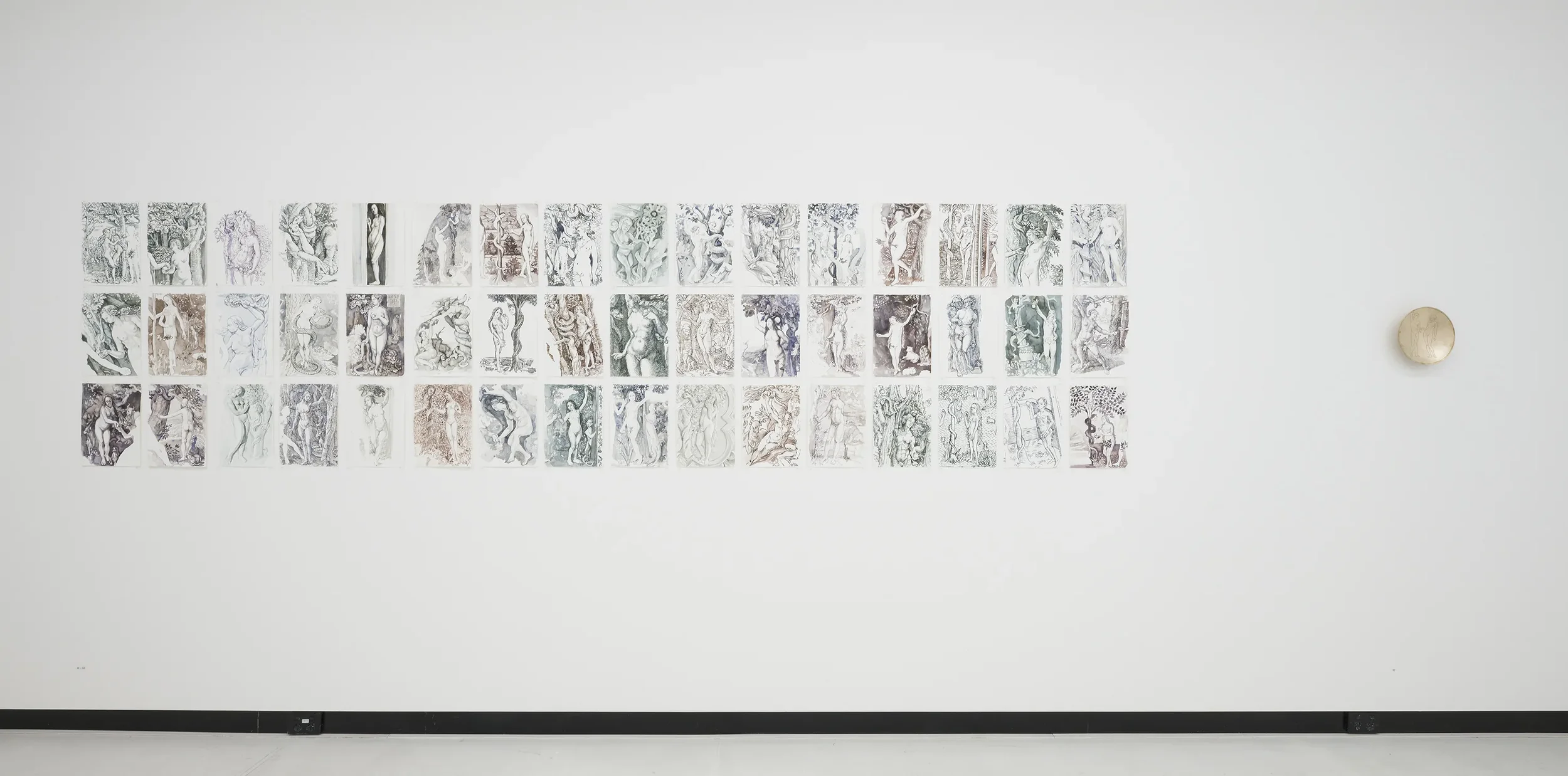
These ancient meanings pile up in Clare Thackway’s works, who has, for this exhibition, mined the archives of the Warburg Institute in London for images of Eve: before the Fall, and represented her in fifty-two watercolour paintings like imprints from the past — shadowy, single-tone images projected onto our present. The process is one of feminist metabolising: directly copying rather than reinterpreting or augmenting. Cropping and reinscribing images as disparate as medieval woodcuts – copies of which may have functioned as early versions of porn, passed hand-to-hand – and engravings to William Blake and the Sistine Chapel, Clare reveals a rich, strange trove of Christian art, which is not what we might imagine. What Clare found was not images representing a transgression, but images that are wholly and surprisingly sexual and transgressive in and of themselves. We see Eve in a repeated schema from iconography, passed through the centuries, reinscribed by Clare as an affirmation of the unstable, cursed, wild woman – writhing, witchy and sensual at the centre of a secret flesh world. Strong diagonals show Eve in an animalistic nature place. The tree of life conceals multiple vulva shapes as Eve reaches out to provide tempting apples. She whispers softly to a wiley, erotic woman-snake, who appears to be Eve’s mirror. Adam is trimmed almost out of frame or whited out, but for his outstretched hand, ready to accept the apple. History crackles with fevered politics through iconography.
Clare borrows from the West’s inherited canon of images to question received wisdom and point to the freedom that might lie beyond their burden. Here, they flash by like secrets with a storytelling logic. To these classical subjects of painting, Clare now adds antique brass objects: a soap dispenser, a gilded door knocker, and a keyhole allude to Holy cleanliness, nonadmission and permission. The golden snake, an image of terror, shame and forbidden knowledge, can also be a symbol of renewal and transformation by shedding. As the original female story of discovery and banishment, the snake has outlasted its Christian origin, but retains its cultural influence today: paradise can be ruined should a woman reach for too much. There’s a less known reference: that of the bronze serpent raised by Moses in the desert, which heals those who look upon it. In this exhibition, the golden snake appears anew, on a bed. It’s as though the narrative arc bends away from an ancient religious tradition toward a new kind of liberation, agency and knowing. Perhaps Eve is stepping out of paradise.
In my mid-twenties, I saw a film concerning Sigmund Freud and Carl Gustav Jung’s friendship as they birthed the field of psychoanalysis. Female hysteria is one of the unnamed subjects in A Dangerous Method by David Cronenberg, and yet the narrative of therapy and self-development gives way to a much more profound and uncontainable finale: neither Freud nor Jung realise that their new grand theories of the mind are about to be subsumed by the great historical trauma of the world wars – the destruction of empires, the onslaught of mass mechanised warfare, the belated crashing down of the 19th century’s male political power systems. Before the credits roll, we are told that Jung will go on to suffer a prolonged emotional collapse during World War I, while Freud will be driven out of Vienna by the Nazis, to die in London in exile in 1939. What Freud and Jung have come to understand will ultimately lead them nowhere. The dangers of female hysteria and the cures of talking therapy pale in comparison to the ruptures that will lead to the blood of Europe.
Political assassins, perpetrators of home violence, bad bosses, space imperialists, genocidal prime ministers, hardline racist leaders and hypercapitalist presidents tend to be conspicuously male. Patriarchal hysteria is the unchecked, unexamined phenomena of our time.
So: why should we put so much effort into repressing our instincts toward free and open expression, when doing so requires a violent struggle, one which is still long from over?
Installation
Civic Art Bureau